Middle School
Where adolescents are taken seriously.
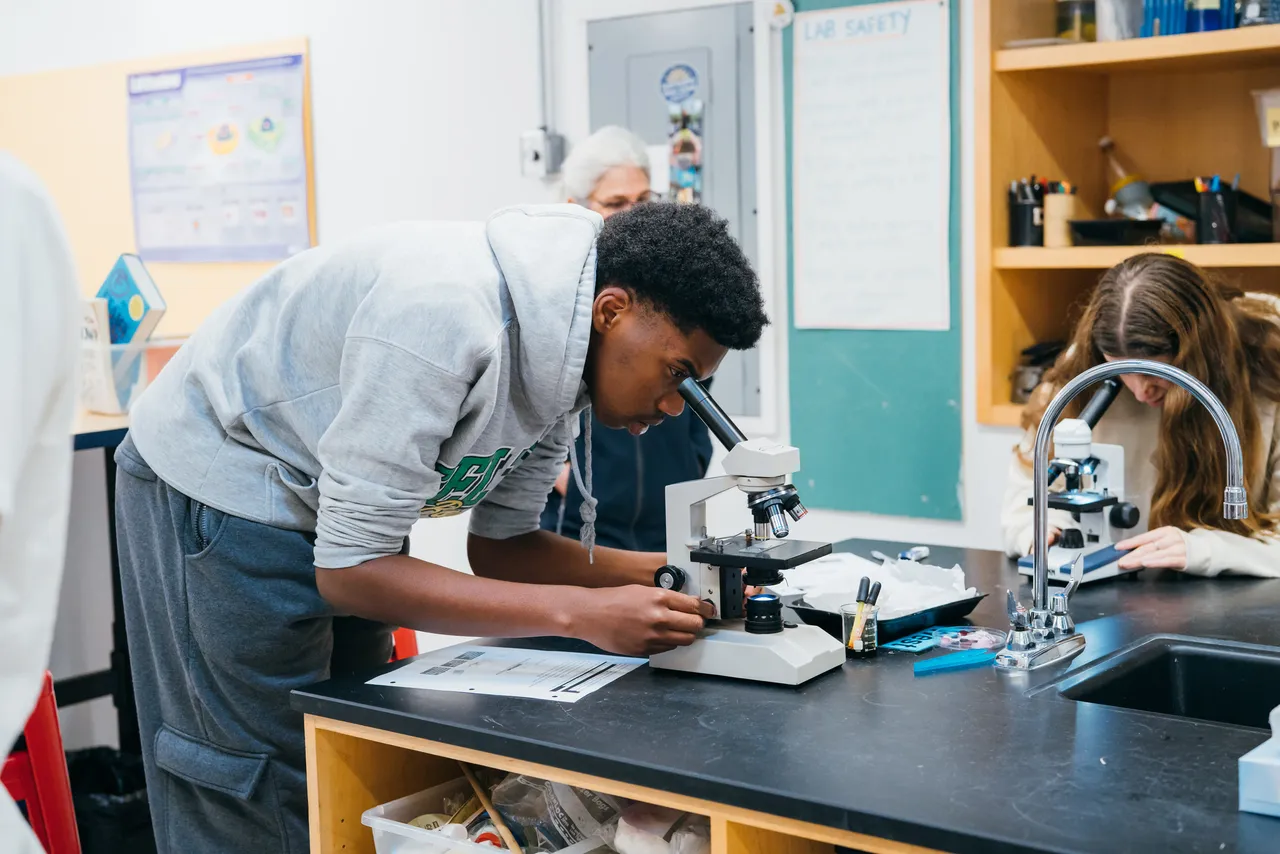
Adolescence is a time of expansive and explosive growth, both literally and figuratively. It is, in particular, a time when the human brain is growing and changing at an incredible pace. Adolescents become more able to build new mental pathways, to draw connections and think more abstractly. It’s a time when students become more capable of challenging intellectual work, moral reasoning, and responsibility. It’s also a time when a growing drive and need for independence is starting to stretch a child towards their own greater capacities. It can be an awkward time—when the emerging young adult and the child inhabit the same body and mind. For our middle school teachers, it’s the richest, most consequential time, full of growth and challenge, surprise and delight.
Our Middle School program — spanning 5th through 8th grades — is designed to meet our students right at this incredible nexus of development and both support and challenge them as they grow in maturity and ability.
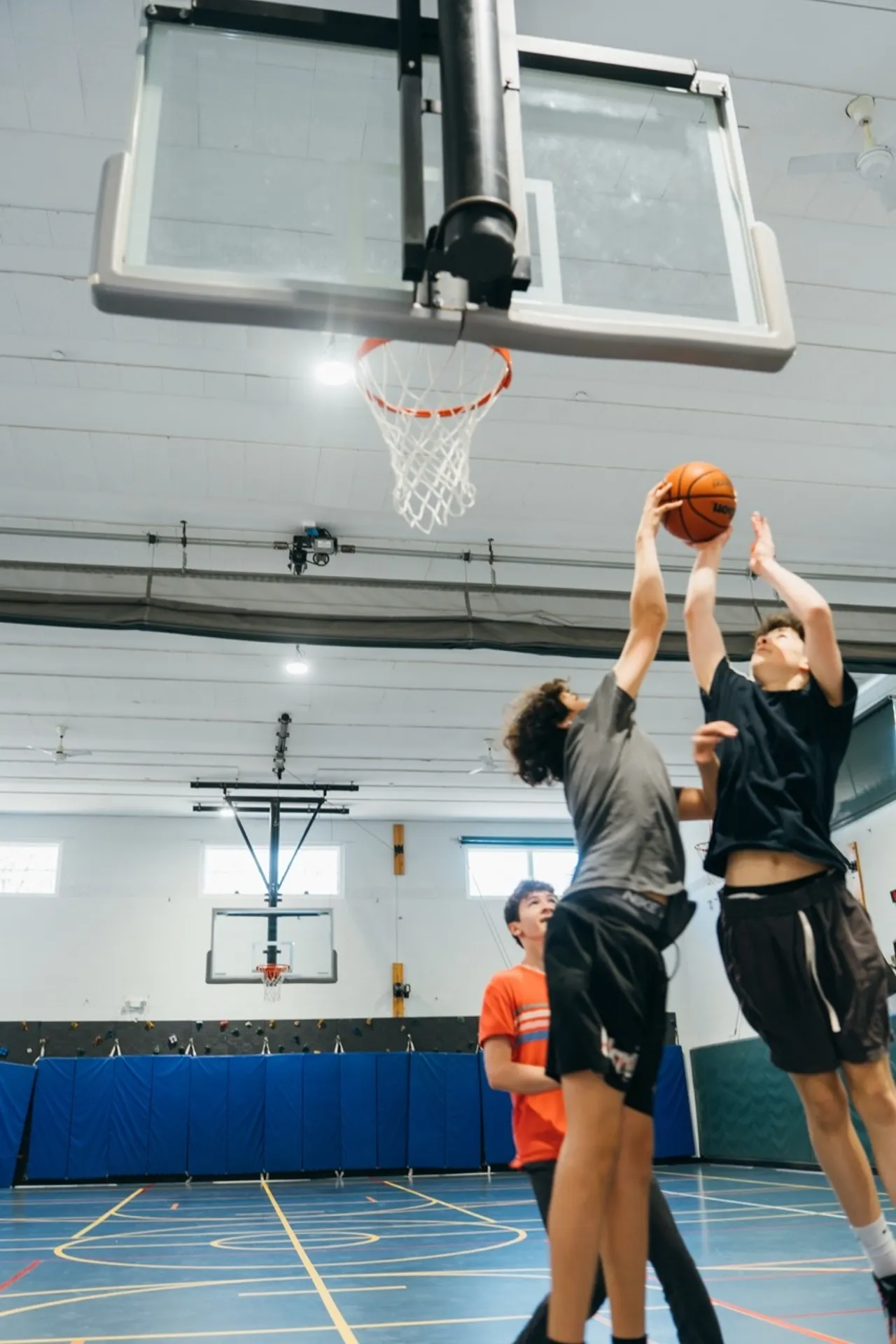
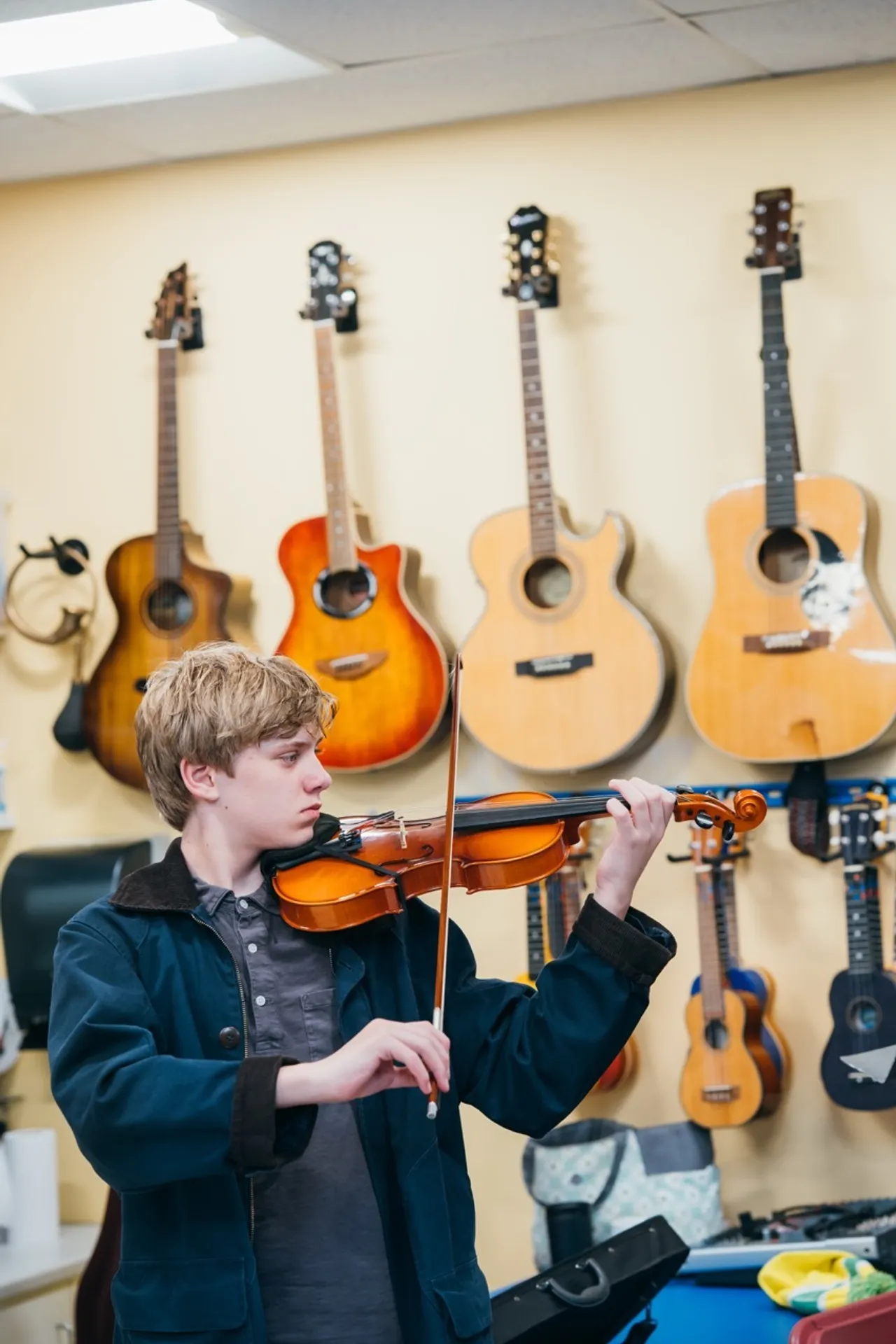
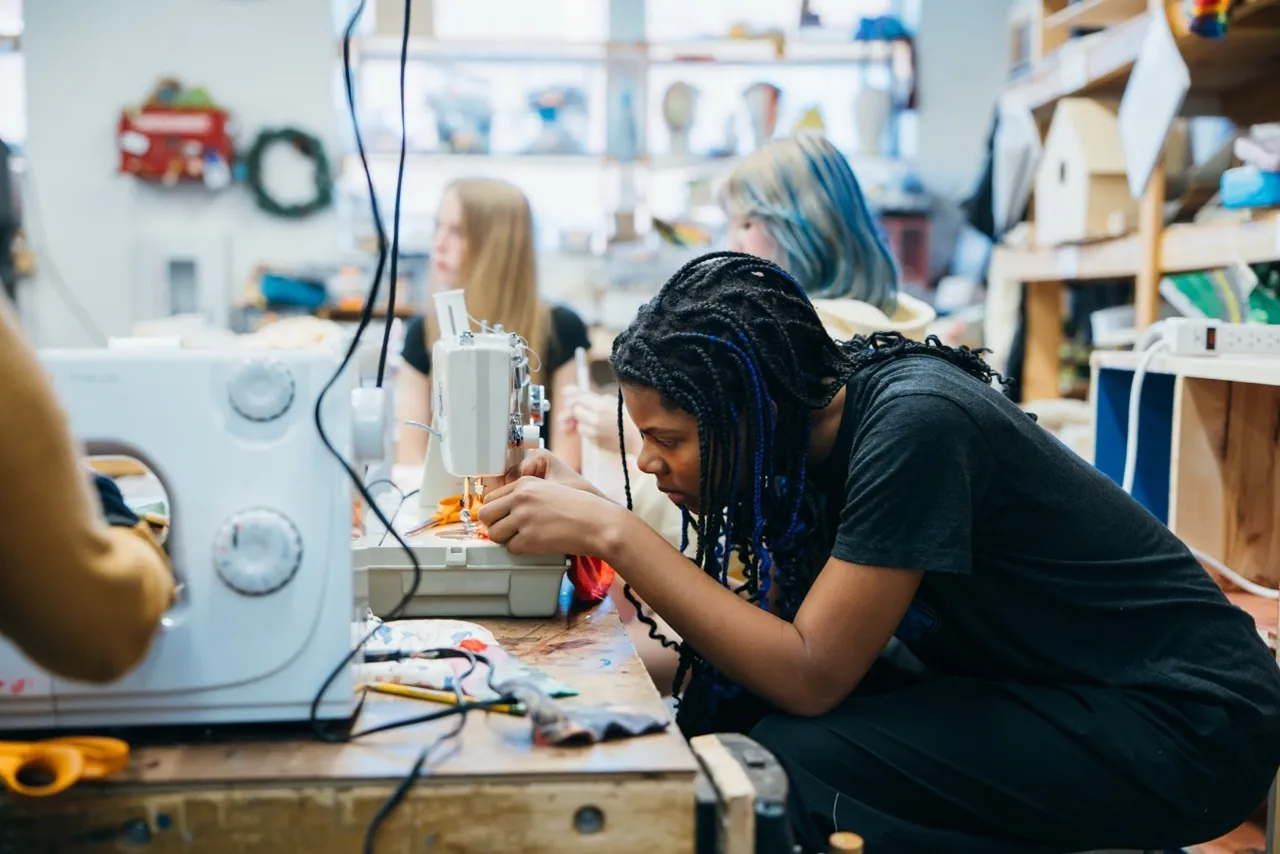
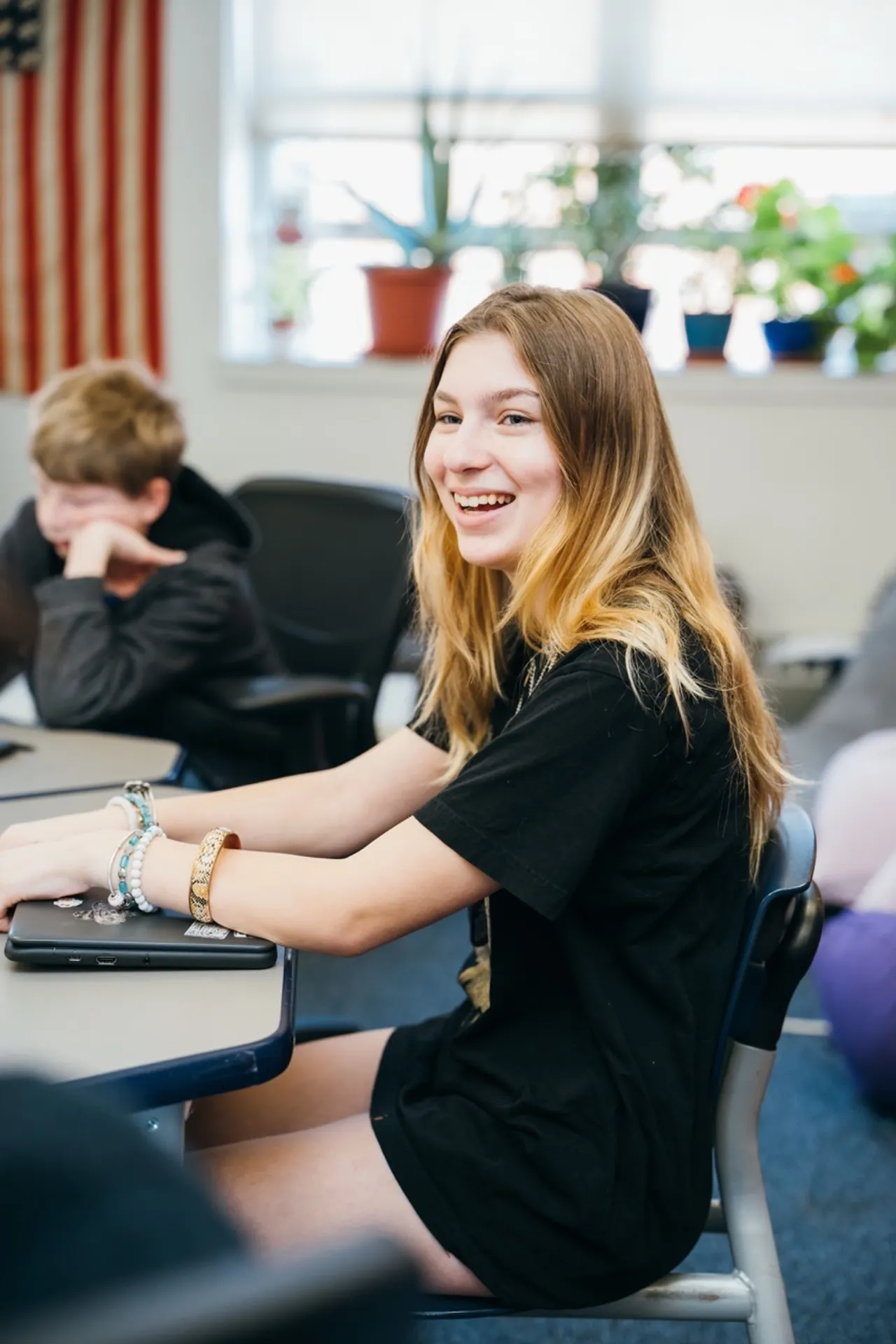
A day in the Middle School.
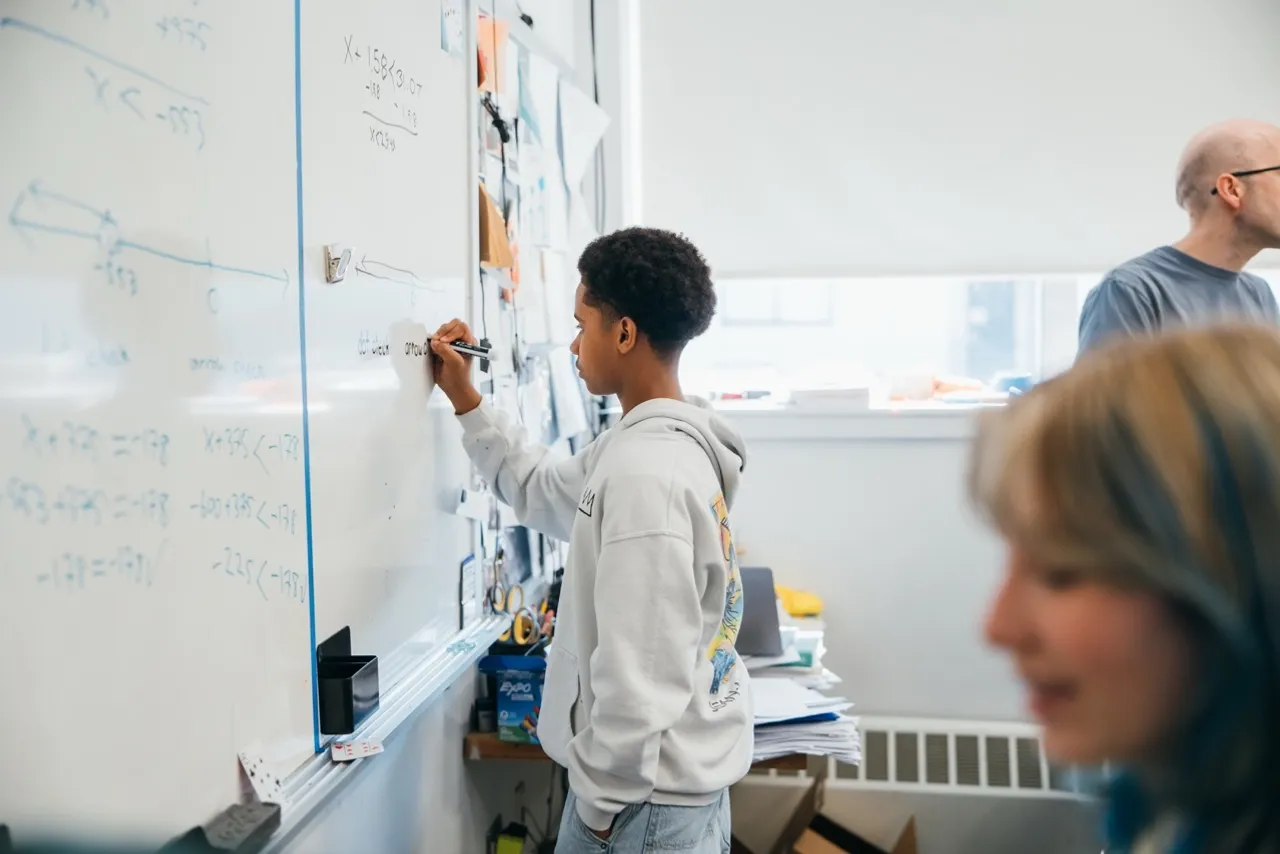
The middle school day shifts toward depth and independence. Fifth and sixth graders move through substantial academic blocks with time to go deep; the Unit day is built around long, integrated blocks of work, anchored each morning by advisory. Each grade band has two co-teachers and a learning specialist.
Time outside, lunch, & independence.
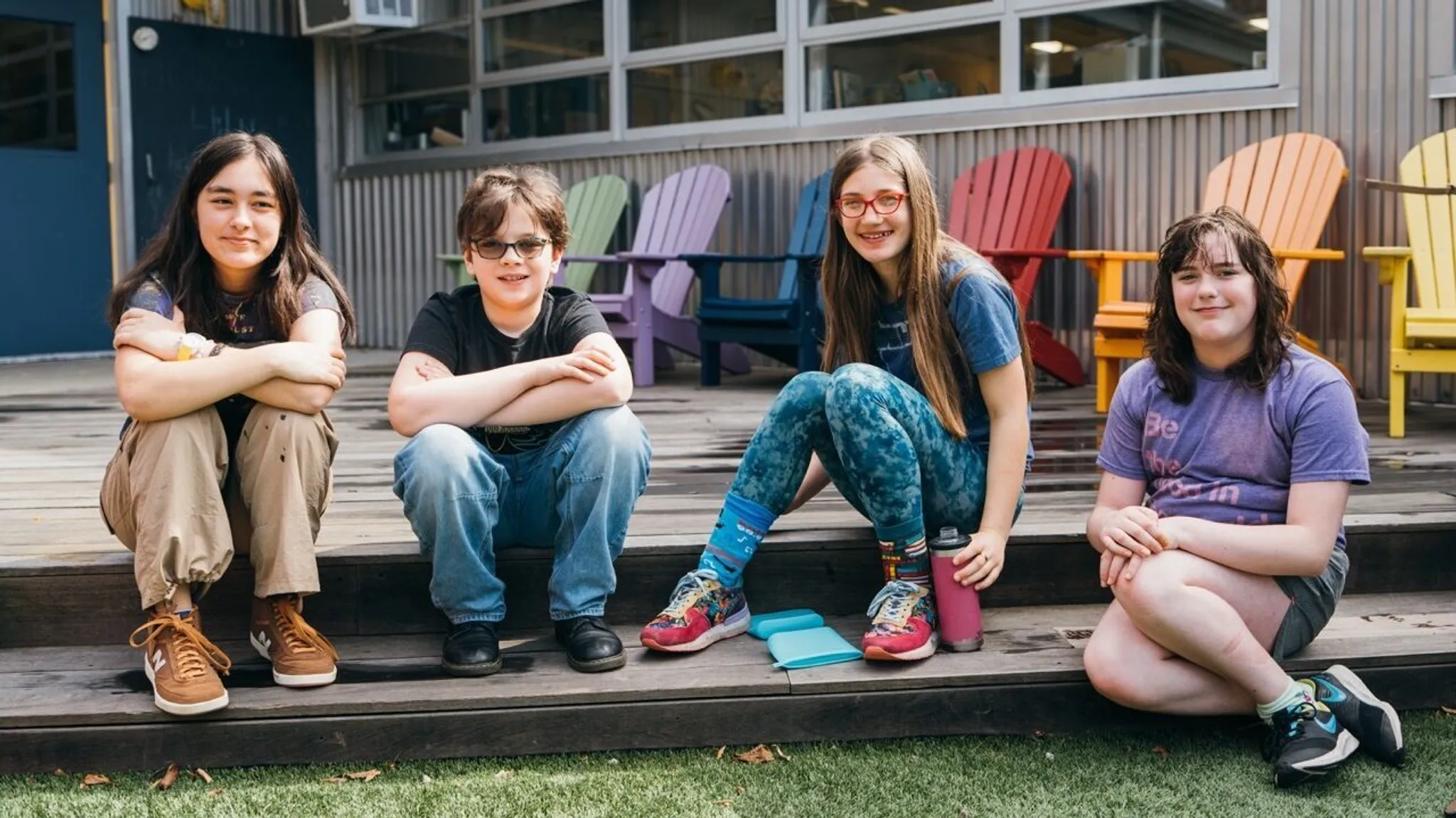
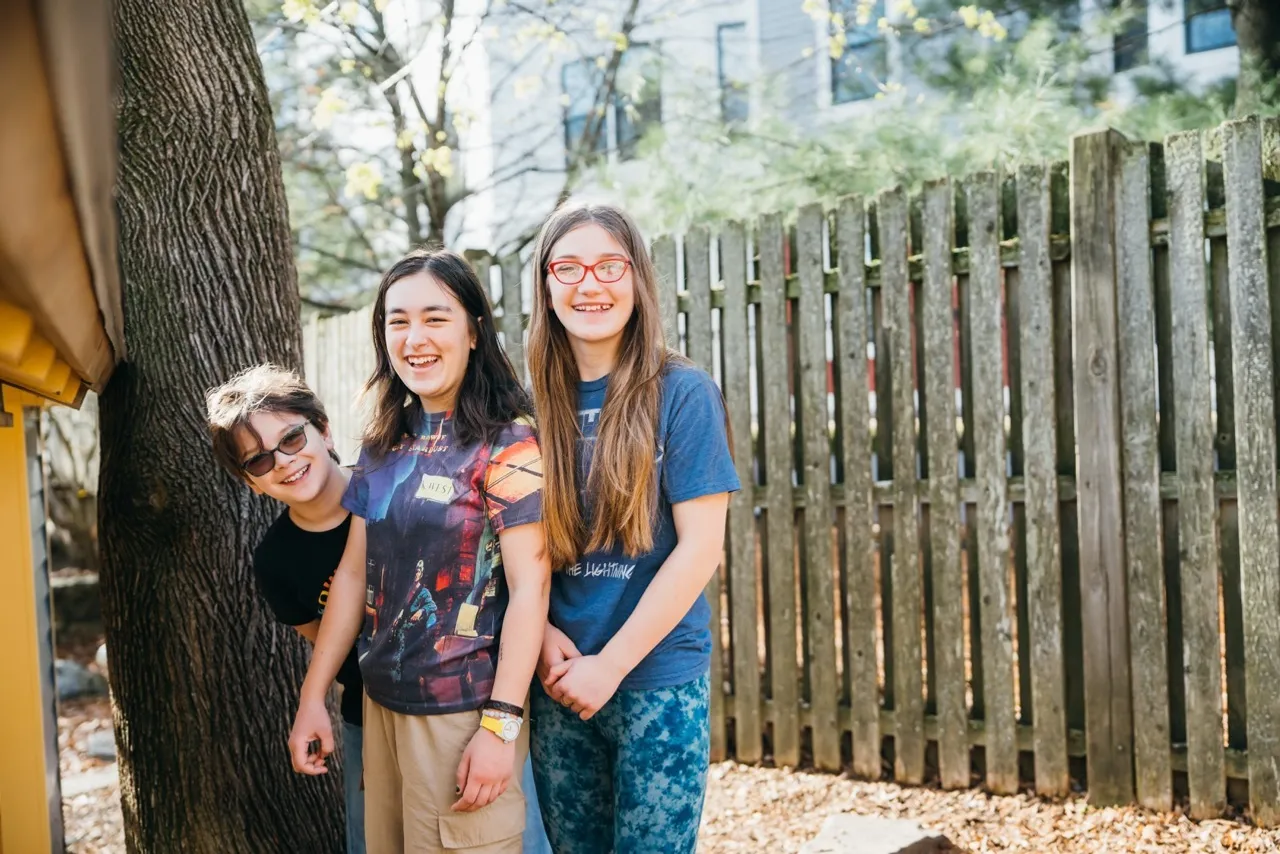
Increasing academic challenge still requires room for students to breathe, play, eat, be outside, and socialize. Students have lunch and time outside in the middle of the day to eat, move, talk, and reset. Generally this time is spent outside (including in neighboring Rafferty Park) except in the case of extreme weather. With parent permission, seventh and eighth graders may leave campus for lunch in groups on Thursdays, a small, real expansion of independence as they prepare for high school.
The role of technology.
We aim for a wise approach to the use of technology and recognize both its benefits and drawbacks, especially for developing minds. Adolescence is when young people build sustained attention, real friendship, and the capacity for the kind of boredom creativity grows from, so we create an environment that supports this. Removing phones gives our students a full day in which their attention belongs to themselves and one another.
To that end, our middle school has a cellphone-free policy — fifth and sixth graders keep phones (if they have them) off and in their backpacks all day; while Unit students hand their phones, smart watches, and connected devices to their teachers at the start of the day and get them back at dismissal. Alongside this, students learn to use technology for real work and to think carefully about responsible use, guided by age-banded acceptable use policies that students and families review together.
Daily rhythms.
Each grade band has its own schedule, shaped to where students are developmentally. Our school runs on a six-day cycle, labeled A through F, which protects time for longer project blocks and the steady anchors of every day — advisory, lunch, and the rhythms students rely on. The Unit day looks meaningfully different from earlier grades: fewer transitions, longer integrated blocks, and Advisory anchoring every morning. The schedules below show the shape of a typical day for each band. Subjects and specialists rotate within that shape across the cycle.
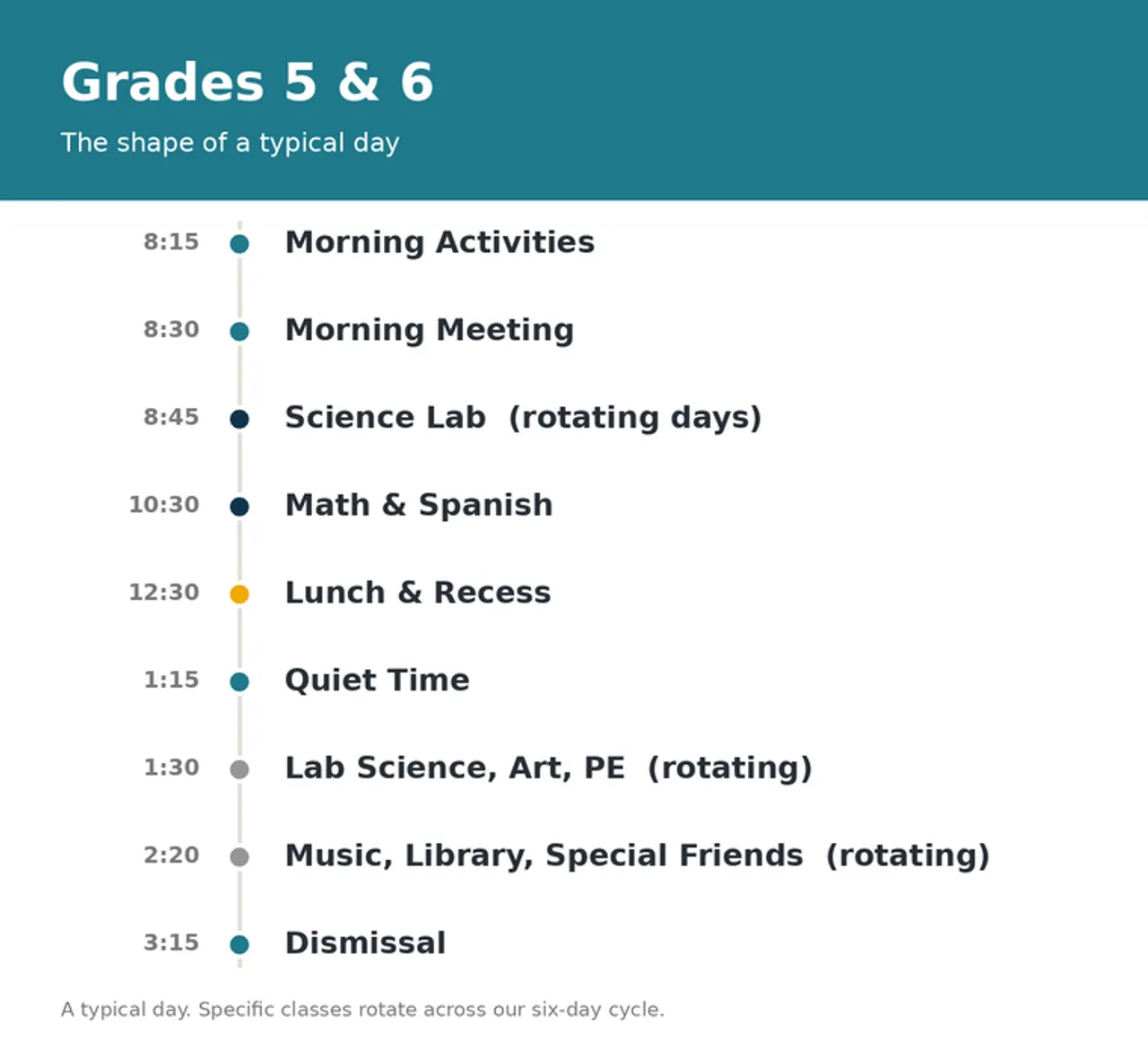
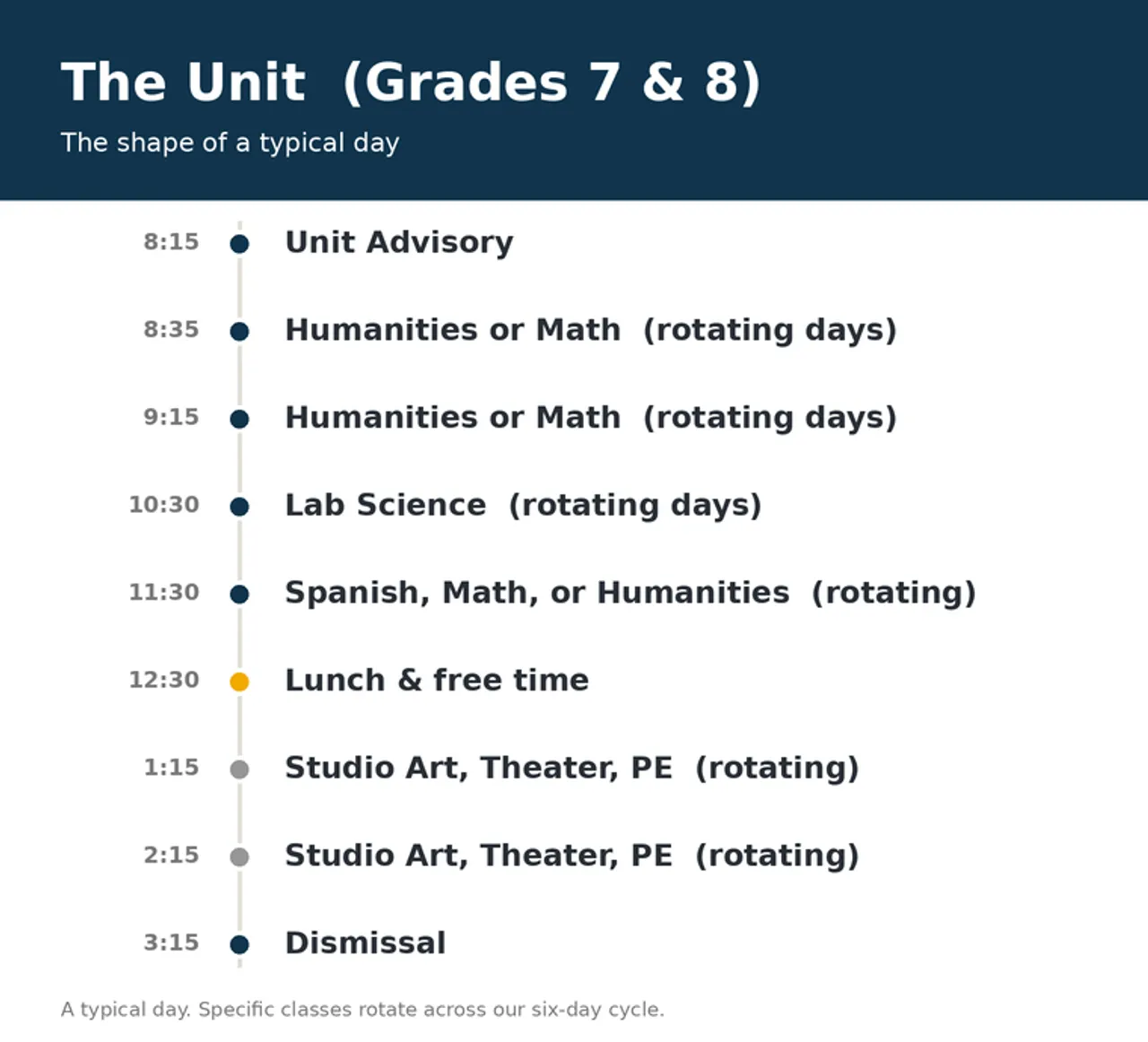
6-Day Schedule
Fayerweather runs on a six-day rotation rather than a five-day week, so classes cycle through Days A–F instead of repeating every Monday through Friday. The Unit layers a Monday–Friday advisory and elective block on top of that same six-day core rotation. Choose a grade level to see how a day unfolds.
Beyond the classroom.
Middle schoolers have access to clubs and classes — STEM, art, theater, and student-led offerings — during the school day. Additionally, the Older Extended Day program serves third through eighth grade until 6:00 PM, with homework time, reading, games, and active play. Fayerweather runs intramural sports teams for grades 5–8 across the seasons. Over half the school takes part in afterschool programs.
Read more about Extended Day & Extracurriculars →
Signature Projects & Experiences
The middle school years are defined by work that asks something real of students — sustained, public-facing, and often unforgettable. A few of the experiences that shape these years:
Grades 5/6
The Petitioner's Project
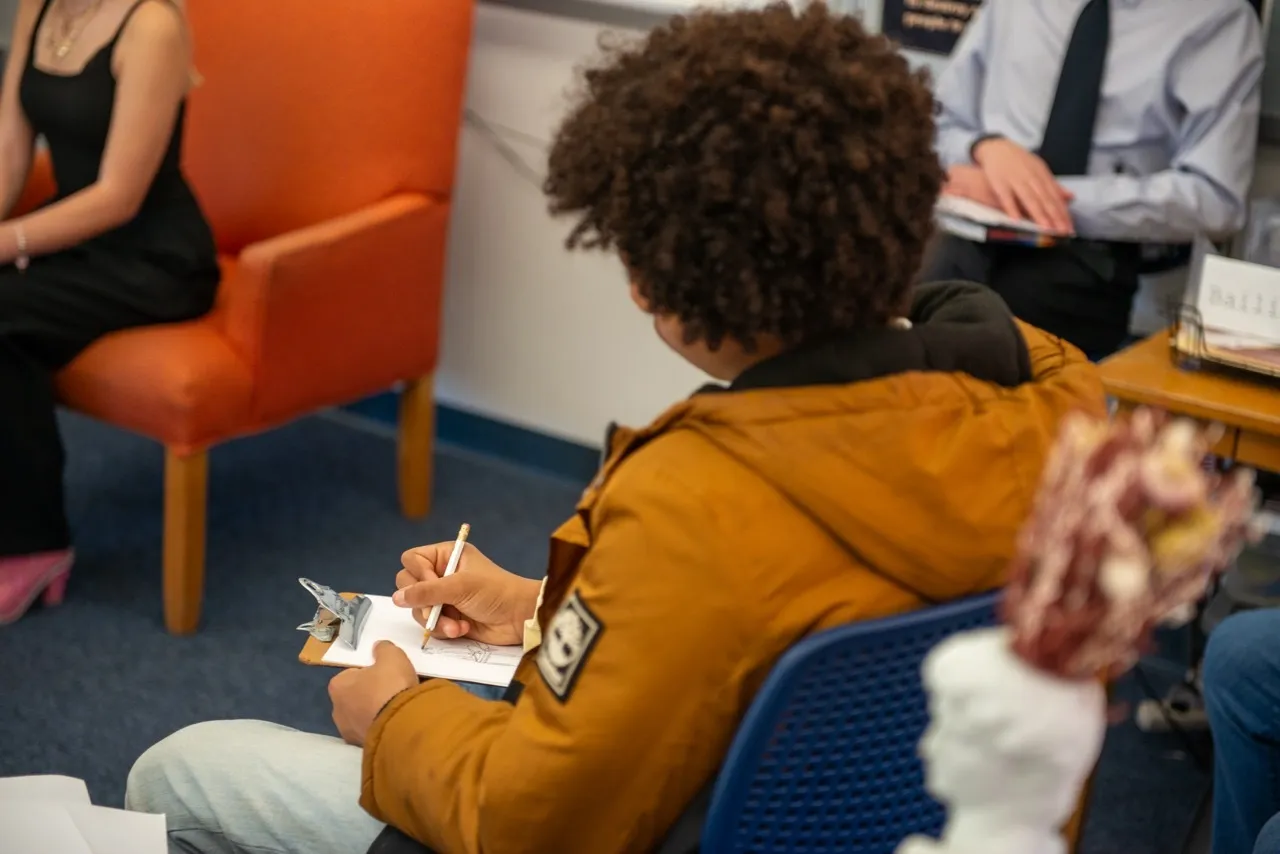
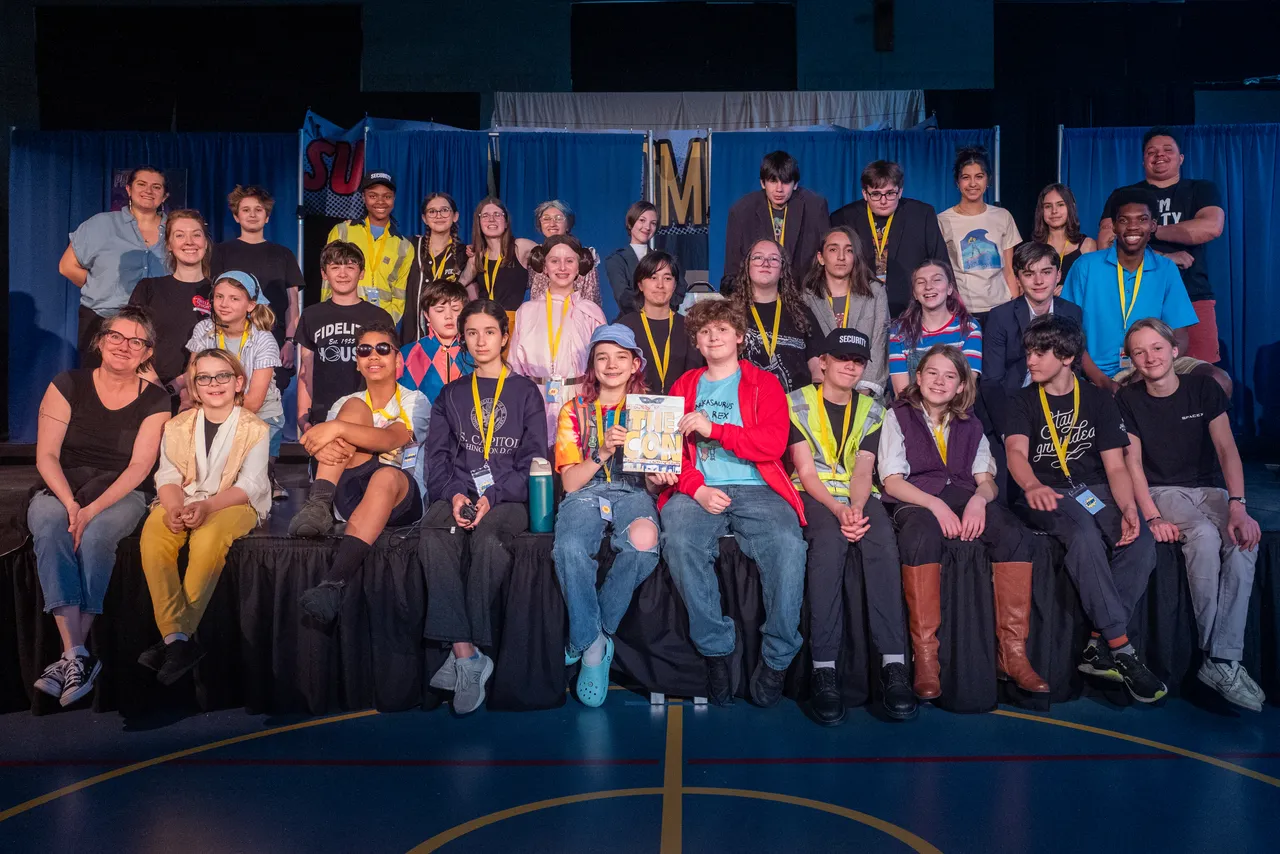
Fifth and sixth graders partner with Revolutionary Spaces to research the people who fought unjust laws without the legal standing to do so — enslaved people, free African Americans, Native communities, women, working-class colonists — and tell their stories. The project culminates in oral storytelling performances at The Old South Meeting House, where students speak the names of their petitioners in the same place that kind of civic courage once echoed.

After Fayerweather: where our graduates go.
A Fayerweather education prepares students for a wide range of high schools. Local independent schools comment on our students' love of learning, their ability to question and reflect, their genuine community-mindedness, and their strong writing.
Most of our graduates place into Algebra 2 or Geometry depending on how their chosen high school sequences their math progression.
Our Next Schools Coordinator works with our middle school students and their families to find the right high school fit after Fayerweather — independent, public, or boarding — and supports the family through every step.
The Next Schools process is comprehensive: consultation beginning in 7th grade, SSAT preparation, mock interviews, an optional semester course for applicants to independent schools, informational panels with alumni and admissions officers, coordination of recommendations and transcripts, and advocacy for students through established relationships with high schools.
In the last five years, Fayerweather graduates have gone on to a wide range of independent, public, and boarding high schools across the region and beyond.
Arlington HS; Bancroft; Belmont HS; Boston Arts Academy; Boston College HS; Boston University Academy; Brimmer and May; Brookline HS; Buckingham Browne & Nichols; Buxton; Cambridge Rindge & Latin; Cambridge School of Weston; Chapel Hill-Chauncy Hall; Commonwealth; Concord Academy; Dublin; Governor's Academy; Lexington HS; Milton Academy; Minuteman HS; New England Innovation Academy; Noble & Greenough; The Putney School; Rivers; Somerville HS; Taft; Thayer Academy; Tremont; Waltham HS; Winsor; Woodhall.
Founded in 1967, Fayerweather is an all-gender independent private school enrolling students in pre-kindergarten through eighth grade and located in Cambridge, MA. Children here are taken seriously — as thinkers, as individuals, as people whose presence in the world already matters. They learn by doing real things, in real places, for real audiences. They become themselves, in community, over time.