
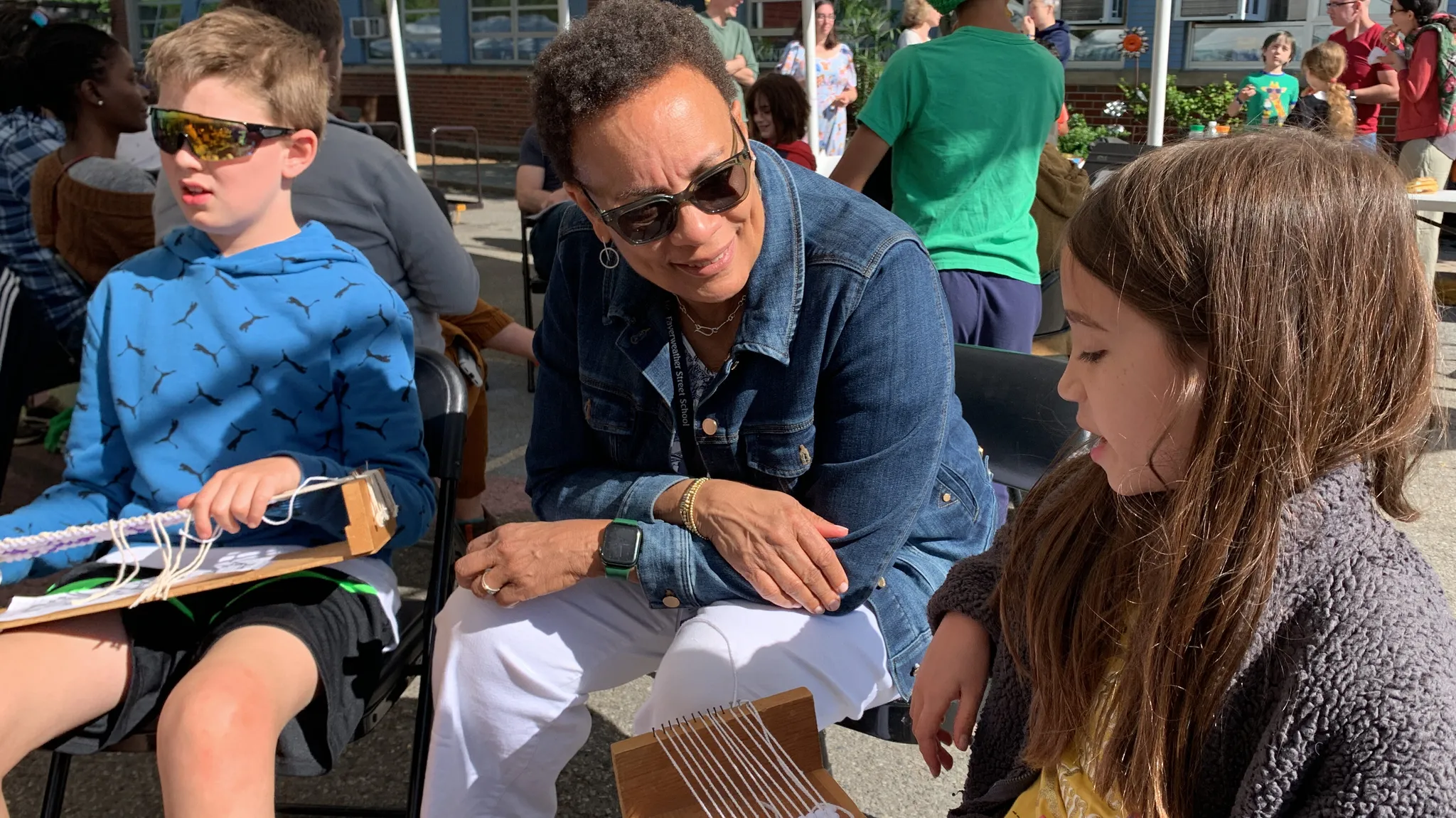
Head of School Blog
Head of School Blog
Leading a school means living inside questions: how children learn, what education is actually for, what this particular moment in the world demands of all of us. I've spent my career thinking about these questions, and I find that leading Fayerweather makes them sharper. The answers worth having tend to come from watching kids think through something hard, from hallway conversations with teachers, from families who push me to see things I wouldn't have seen on my own.
You'll find posts about what's happening at Fayerweather, what I'm reading and wrestling with, conversations with teachers and families, and why I believe the kind of school we've built here matters. I want this to be a place where you can see inside the thinking: the decisions, yes, but also the questions we're still sitting with and the ideas I keep coming back to. I'm glad you're here.
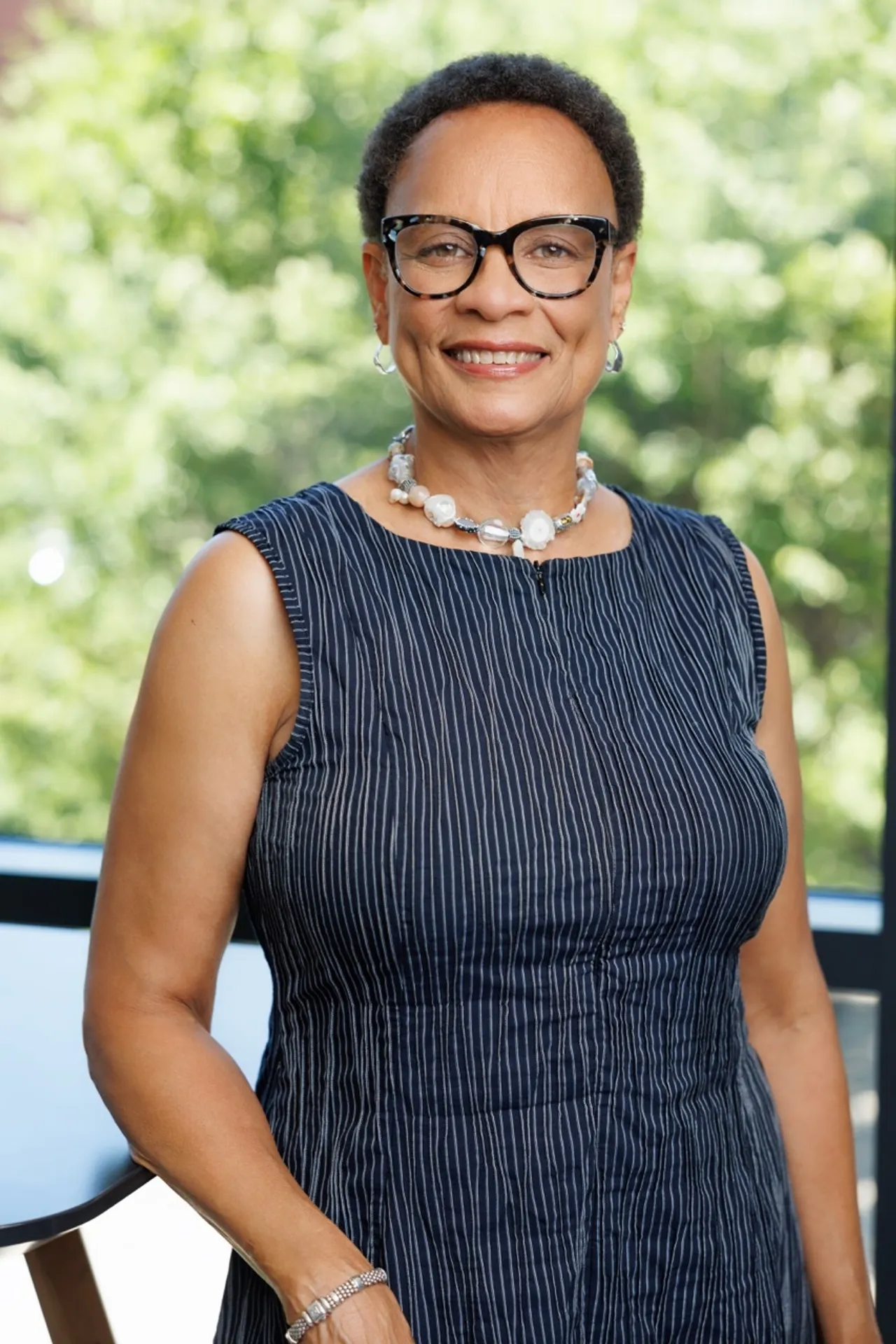
Partly Cloudy With a Strong Chance of Growth: A Weather Report on the Year That Was
June 4, 2026
If this school year were a weather forecast, it might have sounded something like this:
"Expect periods of uncertainty, with scattered moments of brilliance. Some turbulence ahead. By June, skies gradually clearing, with a steady warmth settling in."
That feels about right.
This was not an easy year. There were challenges we anticipated and others that arrived unexpectedly. There were moments that asked more of our students, our staff, and our families than anyone could have predicted. And through it all, you showed up.
You answered late-night emails. You helped your children navigate difficult moments. You trusted us when things felt uncertain. You stayed in conversation with us, even when it was hard.
For that, I am deeply grateful.
One of the beliefs at the heart of a Fayerweather education is that discomfort is not the enemy of learning. More often than not, it is the beginning.
Think about the moments this year when your child came home frustrated, discouraged, or convinced they could not do something. Think about the projects that felt overwhelming, the friendships that became complicated, and the challenges that did not have immediate solutions.
Those moments were not interruptions to their education.
They were their education.
There is something extraordinary that happens when a young person works through something that feels impossible and discovers, on the other side, that they are more capable than they imagined. That is more than confidence. It is resilience. It is the deep understanding that hard things can be faced, worked through, and overcome.
Your children built a great deal of that resilience this year.
We watched it happen every day, in classrooms, on field trips, during performances, in advisory groups, and in moments of conflict and repair. We watched students learn that they could disagree and remain in relationship. That they could make mistakes and try again. That they could feel uncertain and still move forward.
Those lessons will stay with them long after they forget the details of a project, a paper, or a test.
And none of this happens without you.
The resilience that lasts, the values that endure, and the habits of mind that travel with children into high school and beyond are built through partnership. They emerge from the connection between home and school, between what we ask of students here and what you reinforce, model, and nurture there.
You are your child's first and most important teacher.
This year, in countless ways, you lived that truth.
You encouraged your children when they wanted to give up. You held boundaries when it would have been easier not to. You asked thoughtful questions rather than rushing to solve their problems. You sat beside them in moments of disappointment and trusted that they could grow through the experience.
In doing so, you taught them something powerful: that the people who love them most believe in their ability to persevere, learn, and become.
As summer begins, I hope you will give yourselves and your children permission to rest.
Let them be bored sometimes.
Let them discover what to do with an unstructured afternoon.
Let them spend time outdoors, lose track of time, read, create, explore, and reconnect with themselves.
Rest is not separate from growth. It is part of growth.
Summer offers its own lessons in independence, curiosity, and joy.
And when September arrives, as it inevitably will, sooner than many of us expect, your children will return a little taller, a little wiser, and more ready than they realize. We will be here, eager to welcome them back and continue the journey.
Thank you for your partnership, trust, grace, and unwavering commitment to this community. It is a privilege to share in the raising and education of your children. We do not take that responsibility lightly.
Wishing every family a summer filled with rest, adventure, laughter, and the simple joy of watching your children grow.
We look forward to seeing you in the fall.
Strong Beams, Wobbly Moments
April 2, 2026
Welcome to April! On this past Monday, the Parent/Caregiver Association read a passage from the book Scaffold Parenting by Harold S. Koplewicz of the Child Mind Institute. We read chapter 8, “Building Strength.” After sending recent communications to the FSS community, I found it ironic that we would be talking about resilience and grit. It was a timely subject!
One of the quiet truths of childhood is that it is, in many ways, a long series of transitions. New classrooms, shifting friendships, growing expectations, small failures, and big feelings, all unfolding in rapid succession. From the outside, it can look like a steady march forward. From the inside, for a child, it often feels like constant change.
This is where the role of the parent becomes both essential and profound. If childhood is the movement, then parenting is the container. It is the steady structure around the change, the consistency, the rhythm, the “we’ve got you” that allows a child to wobble, stretch, fall apart a little, and come back together again. Schools, too, play a role in building that container, but it is at home where the beams are reinforced daily.
In our recent parent gathering, as we reflected on Scaffold Parenting, we discussed what it means to build those internal beams, courage, confidence, resilience, and tenacity. Not the kind that looks shiny and effortless, but the kind that gets tested when things don’t go as planned (which, as we all know, is…often). The image of a “fortress” came up, a structure that can withstand weather, as what we are aiming to cultivate in our parenting journey. And if you’ve spent any time with children, you know there is no shortage of weather-related shifts and changes.
What struck me most in our conversation was not just what we hope to build in our children, but what we carry ourselves. Many of us grew up in environments where strength meant pushing through, staying quiet, or “grinning and bearing it,” which was my parents' belief system. Some of us were given responsibility early; others learned to manage stress without much language or support. We bring all of that with us into our parenting, sometimes intentionally, sometimes without realizing it.
And yet, what we articulated so clearly is a hope for something more expansive for our children: that they can fall and get back up, yes, but also that they can ask for help, name what they feel, adapt, and move forward with greater awareness and self-compassion. That they develop not just endurance, but staying power, tenacity with reflection.
Of course, here’s the humbling part: children don’t learn this because we say it. They learn it because we live it. They watch how we handle frustration, how we repair after conflict, and how we respond when things don’t go our way (including when we step on one too many Legos or send an email we wish we could unsend). They are, quite inconveniently, always observing.
So the work, it turns out, is ours as much as theirs. To keep nailing down the planks of patience, warmth, awareness, a bit of healthy detachment, and the metacognitive muscle to pause and reflect. To model what it looks like to lose footing and find it again.
Because in the end, childhood is not the only season of transition. Life continues to ask this of us, again and again. And the more we practice finding our footing, the more we become that steady ground not only for our children, but for ourselves.
And perhaps that is the real goal: not to raise children who never struggle, but to raise humans, ourselves included, who know how to keep going, keep learning, and keep rebuilding, one beam at a time.
School as a Sanctuary
March 5, 2026
There is a word I've been sitting with lately: sanctuary.
At its root, sanctuary means a place set apart. Sacred, protected, consecrated to something greater than the pressures of the ordinary world. Historically, sanctuaries were spaces where people could enter and know, with certainty, that they were safe. That the chaos outside could not follow them through the door.
I believe that is exactly what a school is meant to be. And right now, in this particular moment, I believe it more urgently than ever. Children cannot learn when they are afraid. This is not a philosophical position; it is a neurological fact, backed by decades of research in child development and the science of learning. When a child's nervous system is in a state of threat or hypervigilance, the parts of the brain responsible for curiosity, memory, and meaning-making simply cannot do their work. Safety is not the soft part of education. It is the foundation upon which everything else rests.
We live in a moment flooded with competition for our children's attention and emotional energy. The 24-hour news cycle, social media, videogaming, and other screen-based enticements, the ambient anxiety of a world that feels increasingly unstable. These forces press in. Some of them are developmentally harmful. All of them require us to be intentional about what we protect and preserve inside these walls.
Immigration enforcement is one of those forces. The fear it generates among children, families, and even bystanders who love someone who might be affected is real and present in our community. We don't pretend otherwise. And we also know that we have a responsibility to act on what we believe: that every child who walks through our doors deserves to learn, play, question, and belong here without fear.
That is why I want to share with you the formal immigration and student privacy policy that Fayerweather has put in place.
This policy reflects both our values and the legal landscape. Governor Healey signed an executive order on January 29, 2026, prohibiting ICE from conducting civil arrests in state facilities and from using state property for enforcement staging, and filed legislation that, if passed, would require a judicial warrant for any immigration agent to enter a school, childcare program, or health care facility. Fayerweather's policy is aligned with this direction and with the Department of Elementary and Secondary Education (DESE) guidance already in effect.
In practical terms, our policy means:
We do not collect or share information about students' or families' immigration status.
If an immigration official contacts or arrives at our school, all requests are immediately referred to me. No staff member may grant access to students, records, or school spaces without my involvement and legal review.
We will not release or permit the questioning of any student without first notifying parents, verifying a valid judicial warrant signed by a judge, not an administrative agency, and seeking legal counsel.
Our commitment extends off-campus: on field trips and away from school grounds, staff act in the place of parents. Students will not be separated from school supervision by immigration officials under any circumstances without the same legal protections applying.
One more thing, and perhaps the most important. At Fayerweather, we do not simply aim to protect children from the outside world. We also prepare them to understand it.
Our teachers are doing the patient, thoughtful work of helping students make sense of what they're hearing and feeling, in ways that are honest, age-appropriate, and grounded in the values we hold as a community. We believe children deserve not to be shielded from reality, but to be held while they encounter it. There is a difference. The goal is not innocence preserved, but agency and resilience cultivated.
We also know that these conversations don't end at dismissal. Many of you are navigating questions at home that don't have easy answers. To support those conversations, we've gathered some resources we trust:
How to Talk: Age-Appropriate Scripts
- HealthyChildren.org (AAP): Talking with Children About Immigration Enforcement
- The 19th News: A Guide to Talking to Your Kids About ICE
- AmazeWorks: Navigating Conversations Across Ages
What to Do: Empowering Through Preparedness
- Informed Immigrant: Family Preparedness Plan
- Immigrant Legal Resource Center (ILRC): Step-by-Step Family Plan
Rights & Legal Protection
- ACLU of Massachusetts: Know Your Rights
- National Child Traumatic Stress Network (NCTSN): Guiding Caregivers
We also ask that parents and caregivers ensure their children know how to reach them and us if they ever need to. This is especially important for students who travel independently, whether by public transportation or bicycle.
And if your family or a family you know in our community could benefit from additional support or information around immigration matters, please reach out. We treat every request with complete sensitivity and confidentiality. To the extent we are able to help, we will. You do not have to navigate this alone.
Founded in 1967, Fayerweather is an all-gender independent private school enrolling students in pre-kindergarten through eighth grade and located in Cambridge, MA. Children here are taken seriously — as thinkers, as individuals, as people whose presence in the world already matters. They learn by doing real things, in real places, for real audiences. They become themselves, in community, over time.