The Work of Wondering
Children's questions are where learning begins.
Curiosity is the original state of the human mind. Children show up full of it, and the question for any school is whether the years that follow will protect and strengthen that curiosity or dull it down.
For us, a child's curiosity is where learning begins. We design units, projects, and whole years around the questions children bring, and around the questions we know how to help them ask. This is collaborative work. Our teachers are present in it: bringing expertise, introducing content, teaching skills, holding the work to real standards. What we avoid is telling children what something means before they have had the chance to wonder about it themselves.
What it looks like
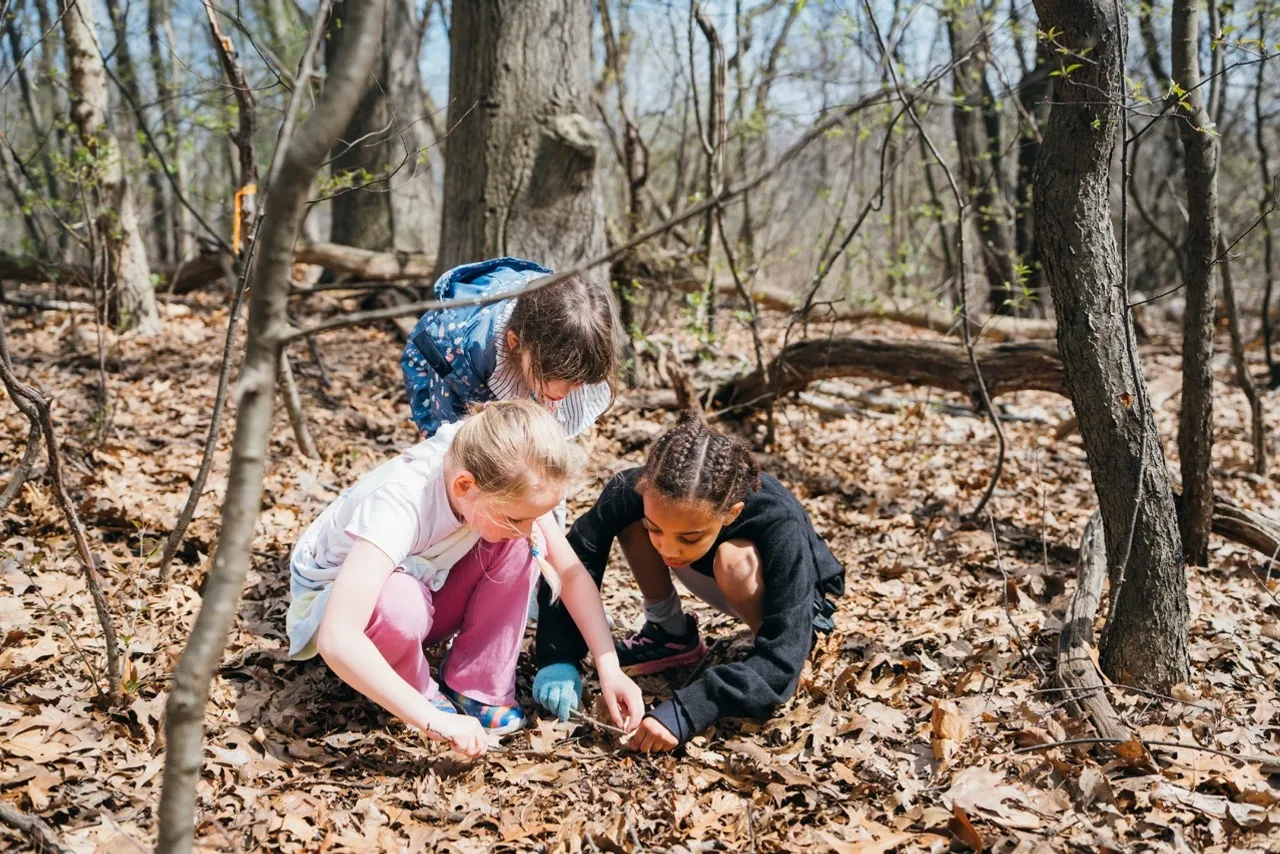
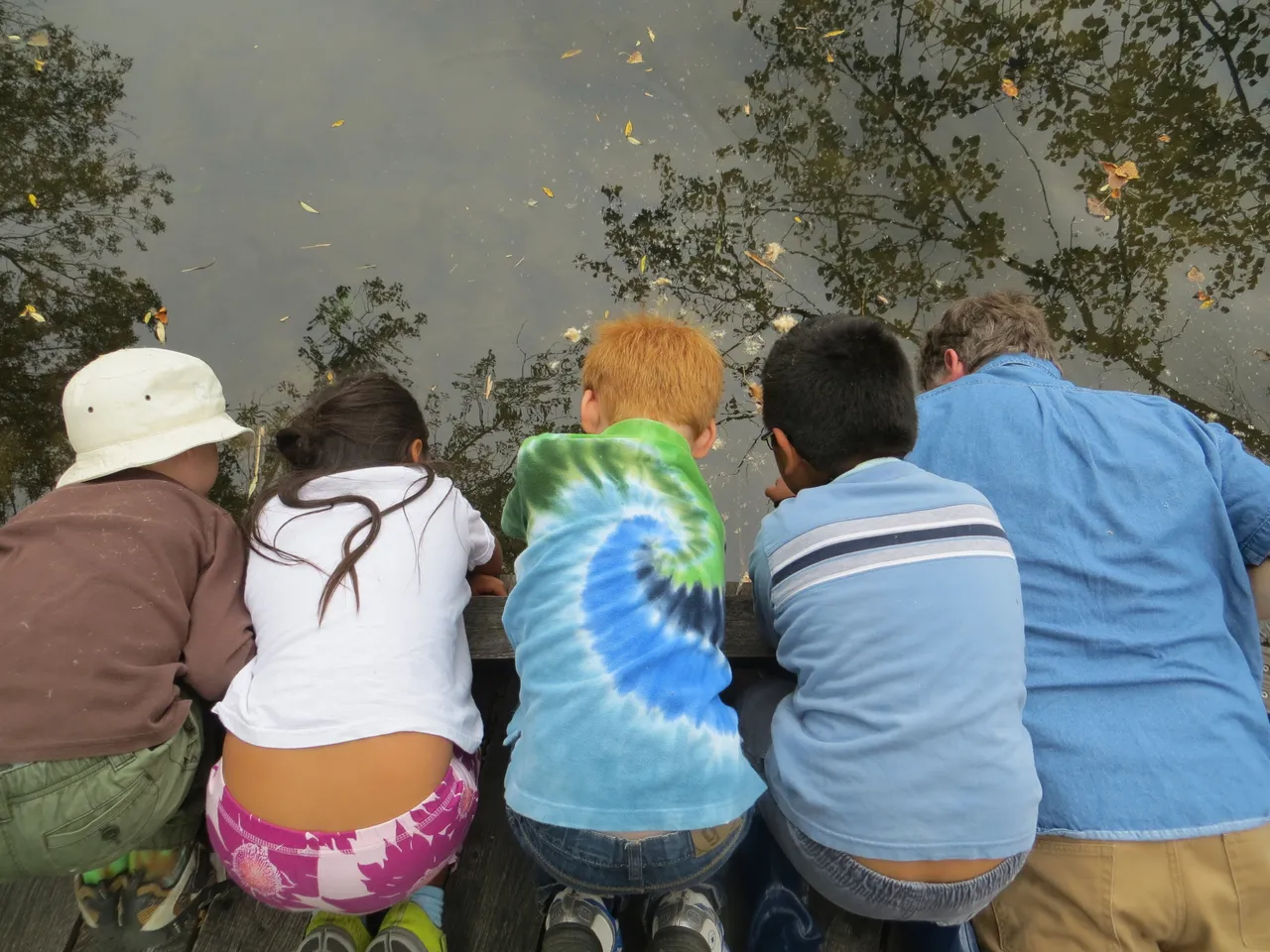
In the primary grades, wondering begins with noticing. Children are taken outside, returned to the same places across seasons, asked what they see, pressed to guess why. Their partial theories are taken seriously. When a child says the leaves are falling because of the wind, the response is a next question, and then another, until the child has followed their own thinking into something they have learned themselves. This takes more time than telling does. It is the only way certain things can be taught.
By the middle grades, wondering has structure. Children learn to formulate hypotheses, design tests, gather evidence, distinguish what they have observed from what they have assumed. They generate questions from texts and images and follow those questions through extended units. In the upper grades, wondering becomes sustained inquiry — a student pursues a question for weeks, gathers information, revises their thinking, arrives at a conclusion they can defend.
Watch any of this for an hour and one thing is unmistakable: our teachers are working hard. They are listening, pressing, linking one child's observation to something the class noticed last month, holding a question open when it would be easier to close it. This is discipline, and it serves a specific end. What children come to understand through their own engagement belongs to them. What they are told, often, does not.
What the practice develops in children
Over time, the questions our teachers ask become questions children ask themselves. A child who has spent years being asked what do you notice? why do you think that is? begins to approach new things with those questions already in mind.
This is the foundation of every intellectual capacity worth building. Scientific reasoning, mathematical thinking, artistic seeing, the moral imagination that lets one person understand another — all of them begin in the capacity to wonder. None can be taught in a semester. They grow, slowly, in children whose curiosity was protected long enough to become a deep and sustained habit.
A pedagogy with a long history
The cultivation of wondering as disciplined practice has a specific intellectual lineage. John Dewey argued a century ago that real learning begins with a child's own encounter with a problem, something she finds puzzling and wants to understand, and unfolds through her active engagement with it, alongside a teacher who guides from within the inquiry. Loris Malaguzzi, whose Reggio Emilia approach has shaped progressive education worldwide, built a pedagogy on the conviction that children arrive with many languages for investigating the world, and that the adult's job is to protect and extend those languages. Our teachers train in these traditions and in more recent methodologies — the Question Formulation Technique, inquiry-based science and math, open-ended observation — that give them specific tools for keeping children's questions at the center of rigorous learning.
This practice in action.
Wondering takes different forms at different ages. The projects below show the practice across the arc.
Grades 3/4
The Trees Unit
In the fall, third and fourth graders become arborists. Armed with field guides to New England tree species and dichotomous keys — the branching identification tools scientists use — students learn to identify the trees around them by bark, leaf shape, seed type, and growth pattern. A dichotomous key works through yes/no questions that lead to a name: does the leaf have a smooth edge or a serrated one? Are the needles in pairs or clusters? Working through a key is an exercise in careful observation and precise language, and students use them in the field, comparing what they find in front of them to what the guide describes.
The chromatography experiment is where the unit turns genuinely surprising. Students extract pigments from leaves and separate them on filter paper, revealing the colors that were present all along but masked by chlorophyll. Fall color change, it turns out, is not addition, it's subtraction. The green disappears and what was always there becomes visible. Students who have done this experiment see fall foliage differently afterward: a beautiful seasonal spectacle that is a scientific process they now understand from the inside.
Founded in 1967, Fayerweather is an all-gender independent private school enrolling students in pre-kindergarten through eighth grade and located in Cambridge, MA. Children here are taken seriously — as thinkers, as individuals, as people whose presence in the world already matters. They learn by doing real things, in real places, for real audiences. They become themselves, in community, over time.