Thinking Together
Children are capable of more than they are usually asked to do, especially together.
In most classrooms, knowledge travels in one direction. The teacher knows the material. The lesson delivers it. Children absorb what they can and are measured on how much they retain.
We teach differently. For us, children are builders of knowledge, not receivers of it. Our classrooms are organized around inquiry, dialogue, and collaborative investigation — the work of asking real questions, testing ideas, drawing on evidence, and developing understanding together. Children think rigorously on their own, and they think alongside others. Each kind of thinking sharpens the other. A half-formed idea becomes clearer when a child tries to say it out loud. A point of view changes shape when another child asks a question that had not been considered.
What it looks like
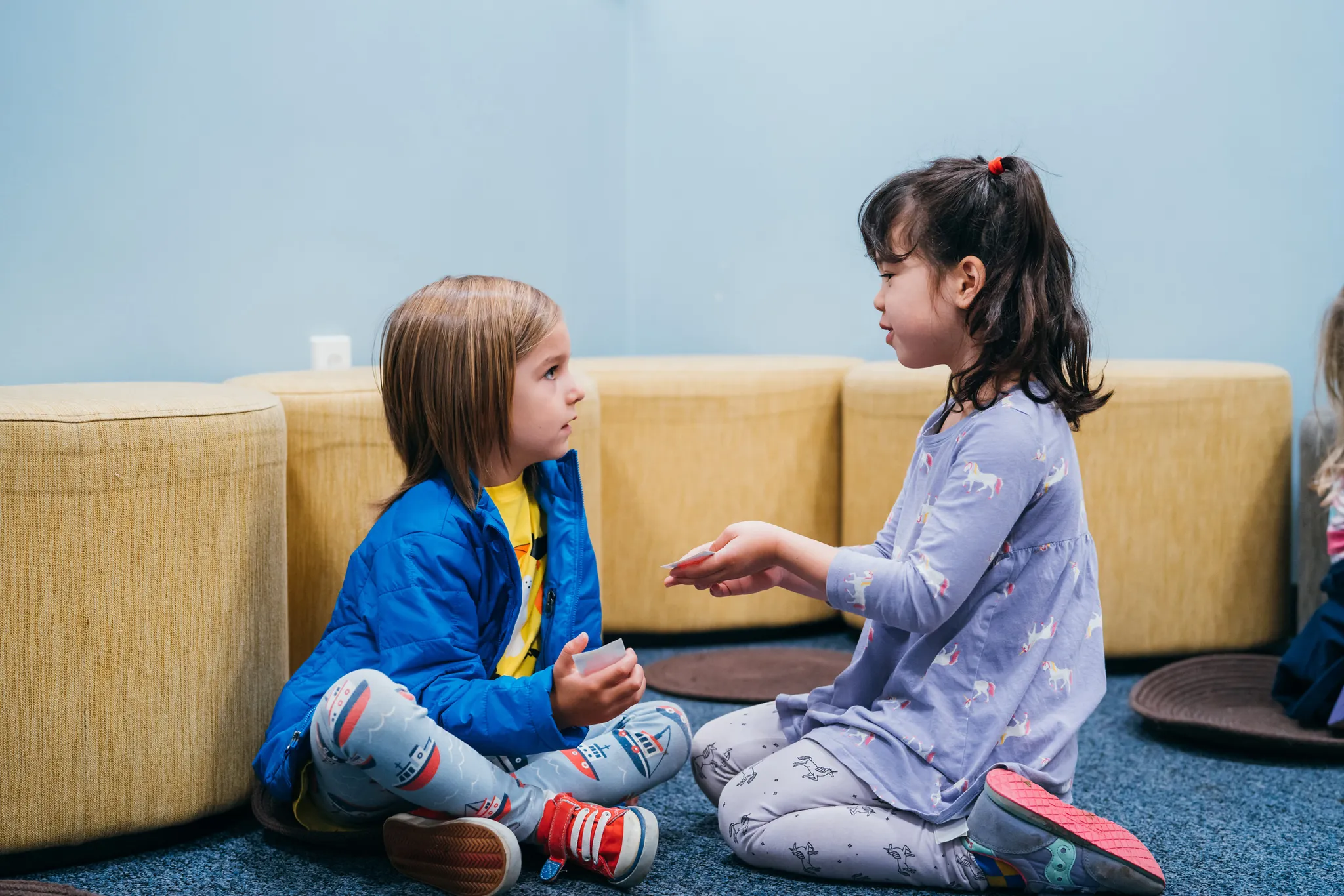
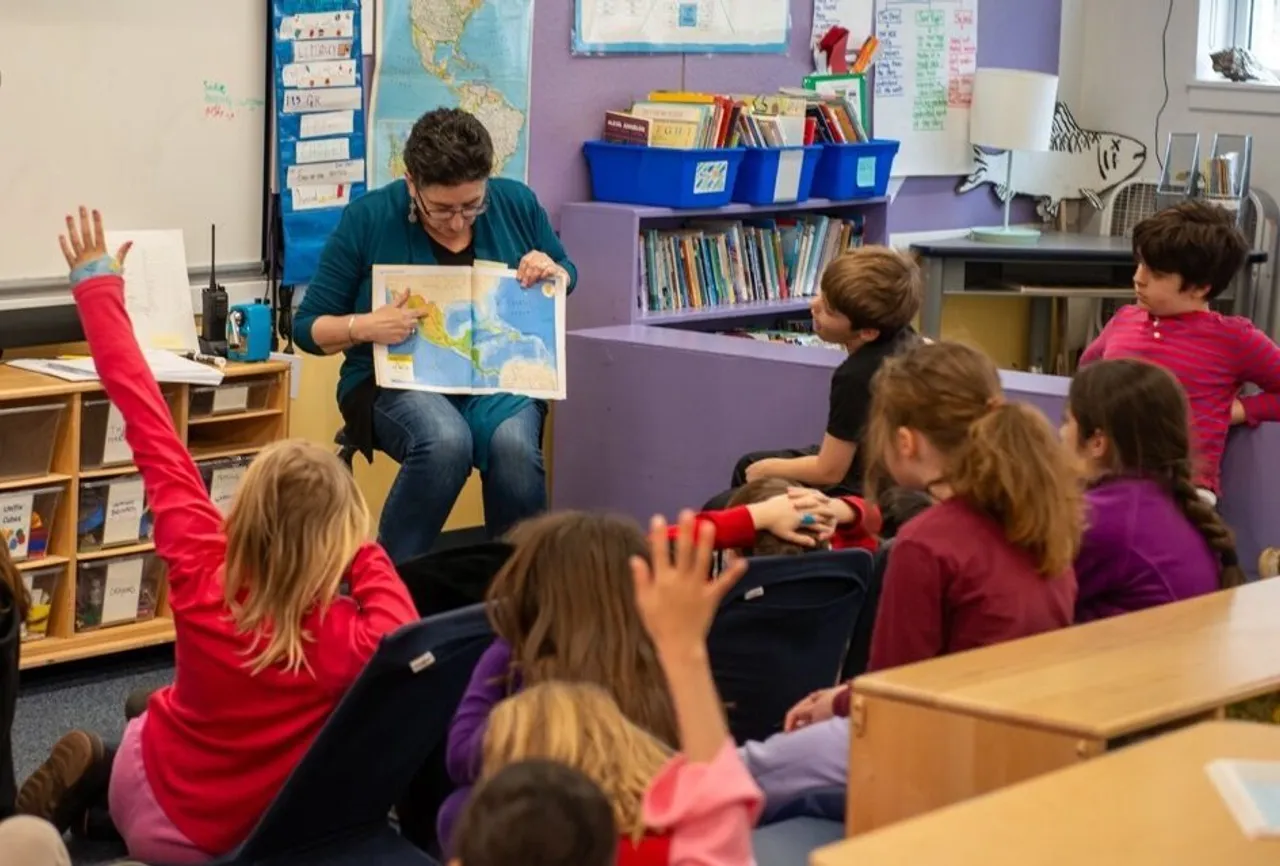
In a classroom in the middle of collaborative inquiry, the intellectual work belongs to the children. They are listening, building on what a classmate just said, disagreeing with reasons, changing their minds, asking questions that open the conversation rather than close it. Our teachers are present — listening, noting, pressing with a sharper question when the group needs it — but they are not delivering the content of the thinking.
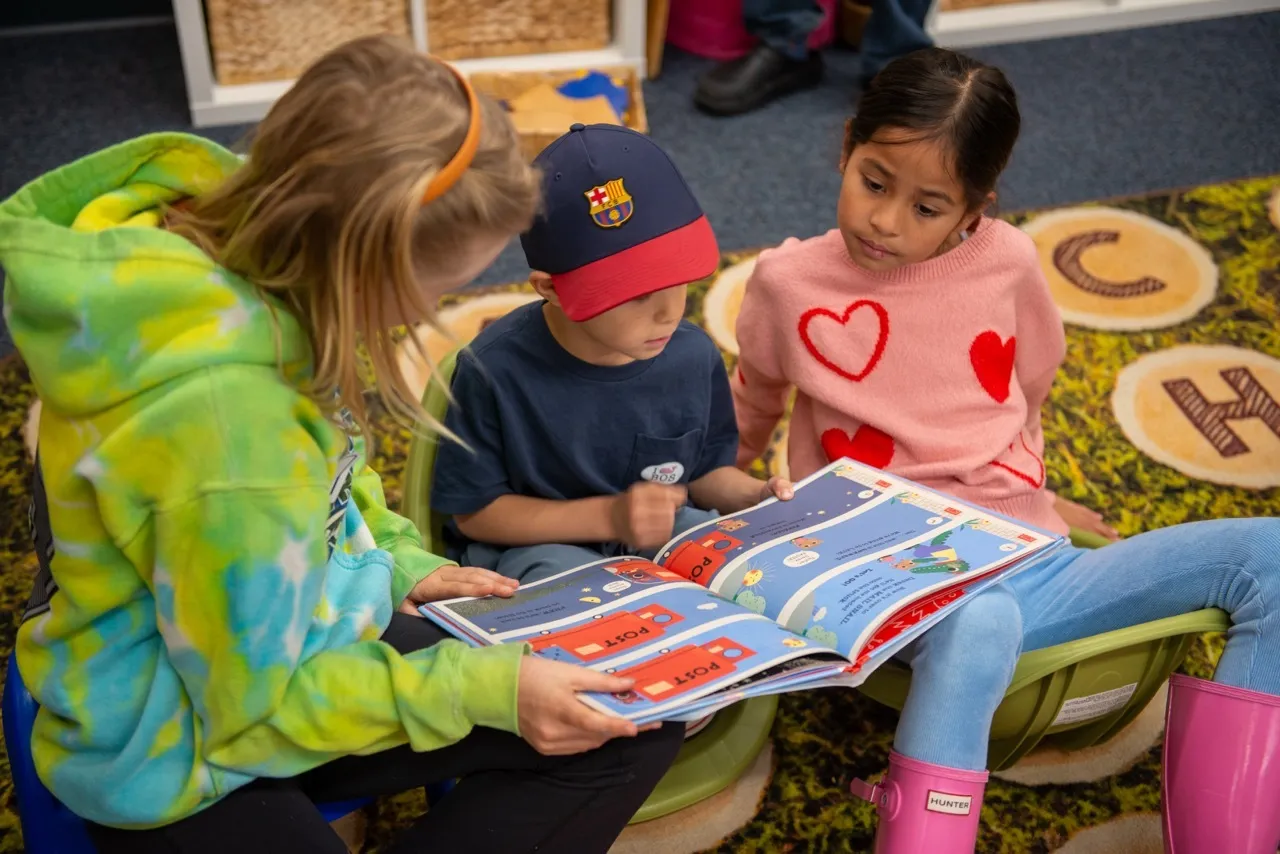
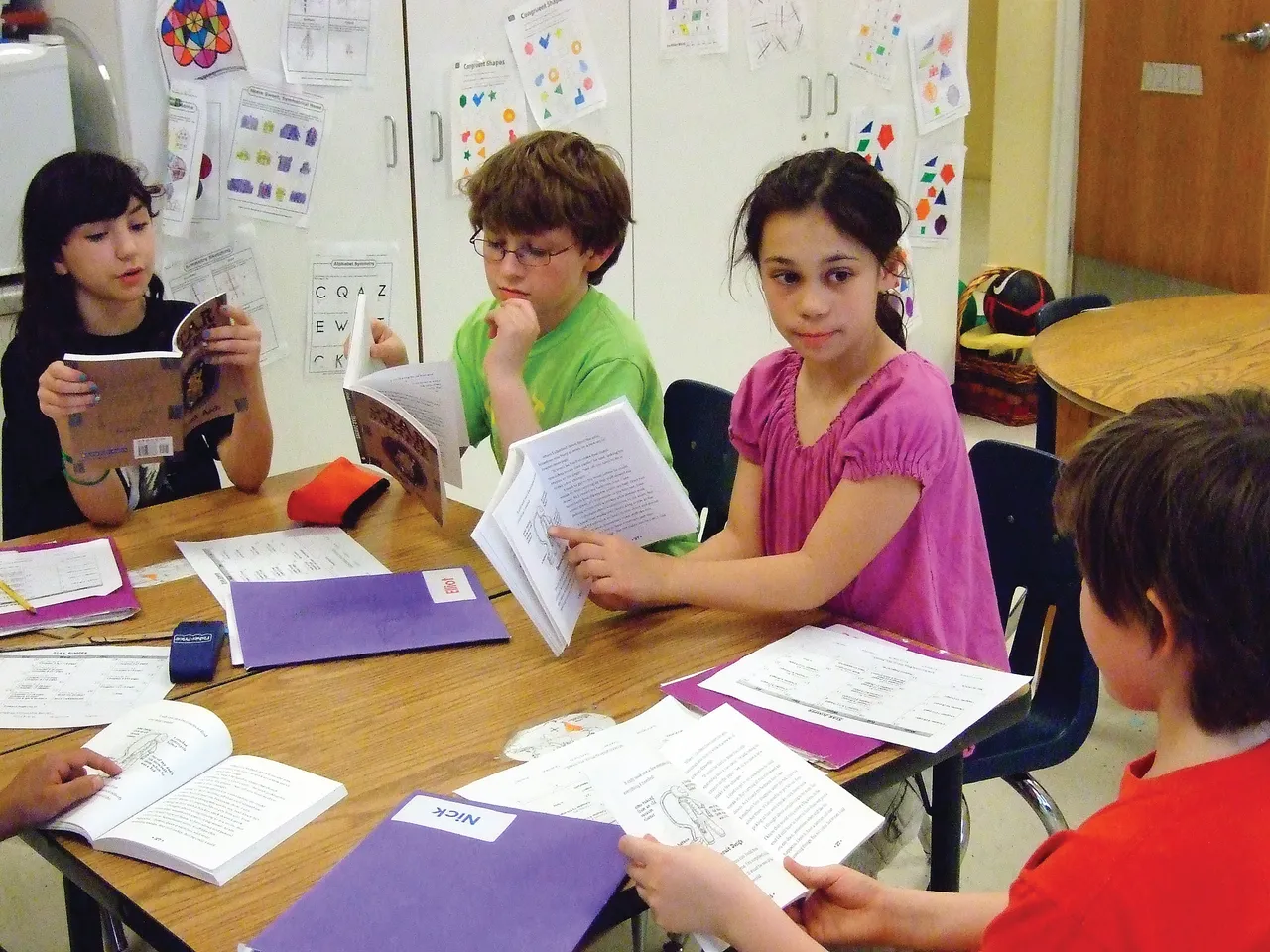
The practice takes different forms at different ages. In the primary grades, children learn the foundational skills of discussion: how to listen until a person speaking is finished, how to respond to what was actually said, how to disagree without being unkind. In the middle grades, they learn structured protocols for inquiry and discussion — generating their own questions from a text or image, running their own book groups with assigned roles, mapping the relationships between ideas using visual tools. By middle school, they hold sustained seminars on literature, history, and ideas, and connect what they are reading in one subject to what they are studying in another.
Children do not arrive already able to do this. They learn it, year by year, in structures we have built specifically for the purpose. The work is theirs; the structures that make the work possible are ours.
What the practice develops in children
Children who spend years thinking together leave with something hard to teach any other way. They have learned to really listen, not just wait to speak. They have learned to build on another person's idea rather than flatten it with their own. They have learned that disagreement is often the beginning of better thinking. They have learned how to change their minds and say so without shame.
They have also learned that their ideas belong in a conversation. That the best thinking they will ever do is rarely done alone. That a classroom can be a place where a dozen children, together, arrive at an understanding that none of them would have reached alone. These are habits of mind, and they are habits of citizenship. Democracy depends on them. So do friendships, collaborations, and most of the serious work adults have to do in the world.
A pedagogy with a long history
Thinking together draws on a lineage of collaborative inquiry that spans centuries. The Socratic seminar — a practice in which learners develop understanding of a shared text through structured discussion led by the questions themselves rather than by the teacher — has been refined since the Greek philosopher for whom it is named. Closer to our own time, Paulo Freire reframed the stakes of this work. In Pedagogy of the Oppressed, he argued that education takes two fundamentally different forms. A banking model deposits knowledge into passive students and produces compliance. A problem-posing model builds knowledge with students through dialogue and inquiry, and produces the kind of thinking human freedom requires.
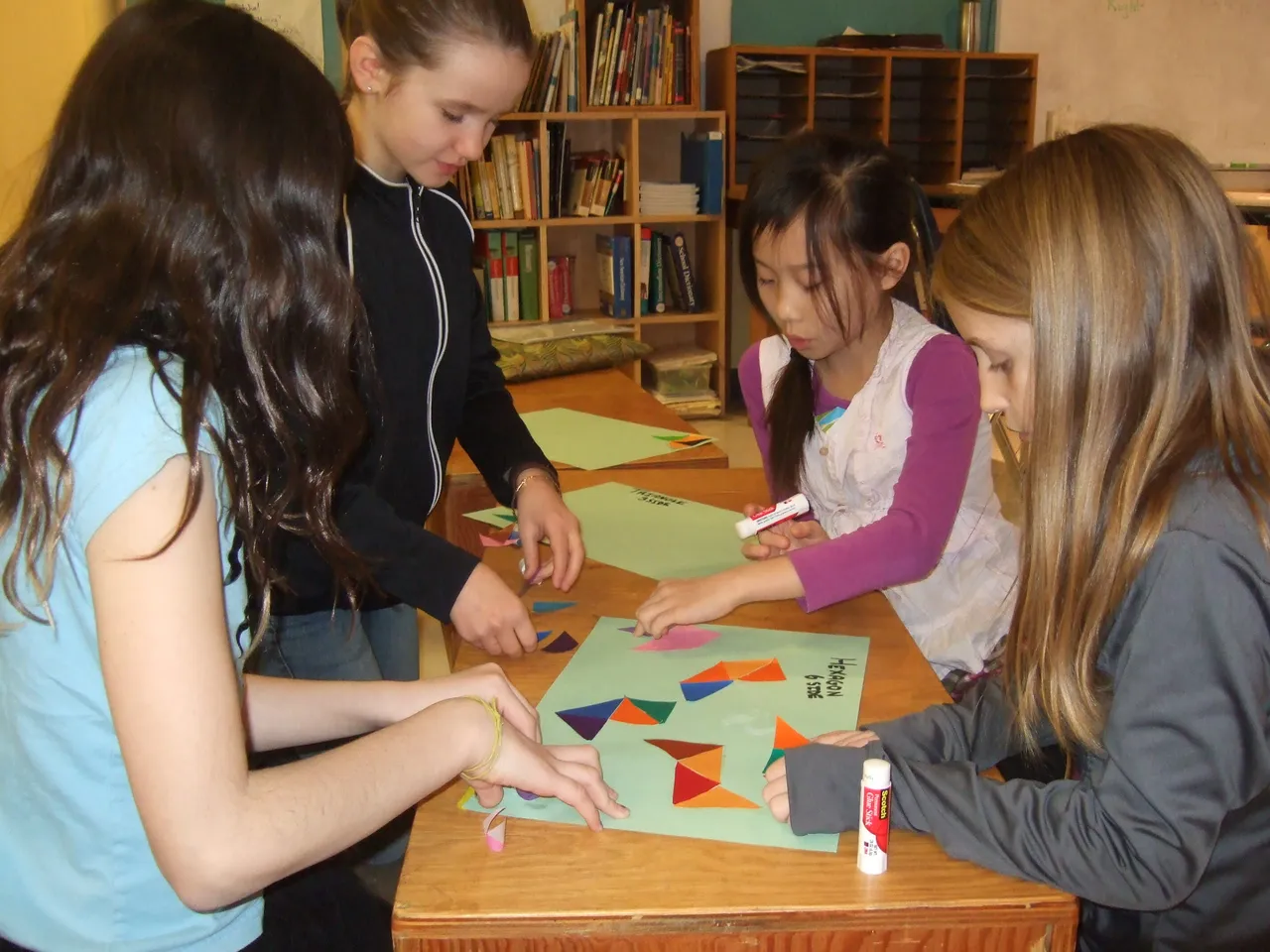
We teach in the problem-posing tradition. Our teachers train in specific methodologies that enact it — hexagonal thinking, a visual tool in which ideas are written on tiles that students arrange and connect, making the relationships between concepts visible and revisable; the Question Formulation Technique, which teaches children to generate their own lines of inquiry; discussion protocols codified by groups like the School Reform Initiative. Each tool shifts the burden of intellectual agency onto the children, where it belongs.
This practice in action.
Structured discussion and collaborative inquiry show up across the grades at Fayerweather. The projects below are examples.
Grades 3 through 8
Symbols of the United States
When students study the symbols of the United States, we begin with questions, rather than with what everyone knows or thinks they know. And we use a disciplined process for generating those questions. Using the Question Formulation Technique (QFT), students examine a primary source image or object and produce as many questions as they can without stopping to evaluate or discuss. Then comes the harder work: sorting those questions, prioritizing them, and deciding which ones are worth investigating.
The QFT teaches students to manage their own inquiry. They learn to distinguish between closed and open questions, to identify what they don't know, and to take ownership of what gets investigated. The research that follows is grounded in genuine curiosity — not a list of questions the teacher already knows the answers to, but the questions students actually want answered. National symbols turn out to be good objects for this practice: familiar enough that students feel confident, rich enough that the questions don't run out.
Founded in 1967, Fayerweather is an all-gender independent private school enrolling students in pre-kindergarten through eighth grade and located in Cambridge, MA. Children here are taken seriously — as thinkers, as individuals, as people whose presence in the world already matters. They learn by doing real things, in real places, for real audiences. They become themselves, in community, over time.