The Writing Life
Children who write daily become writers.
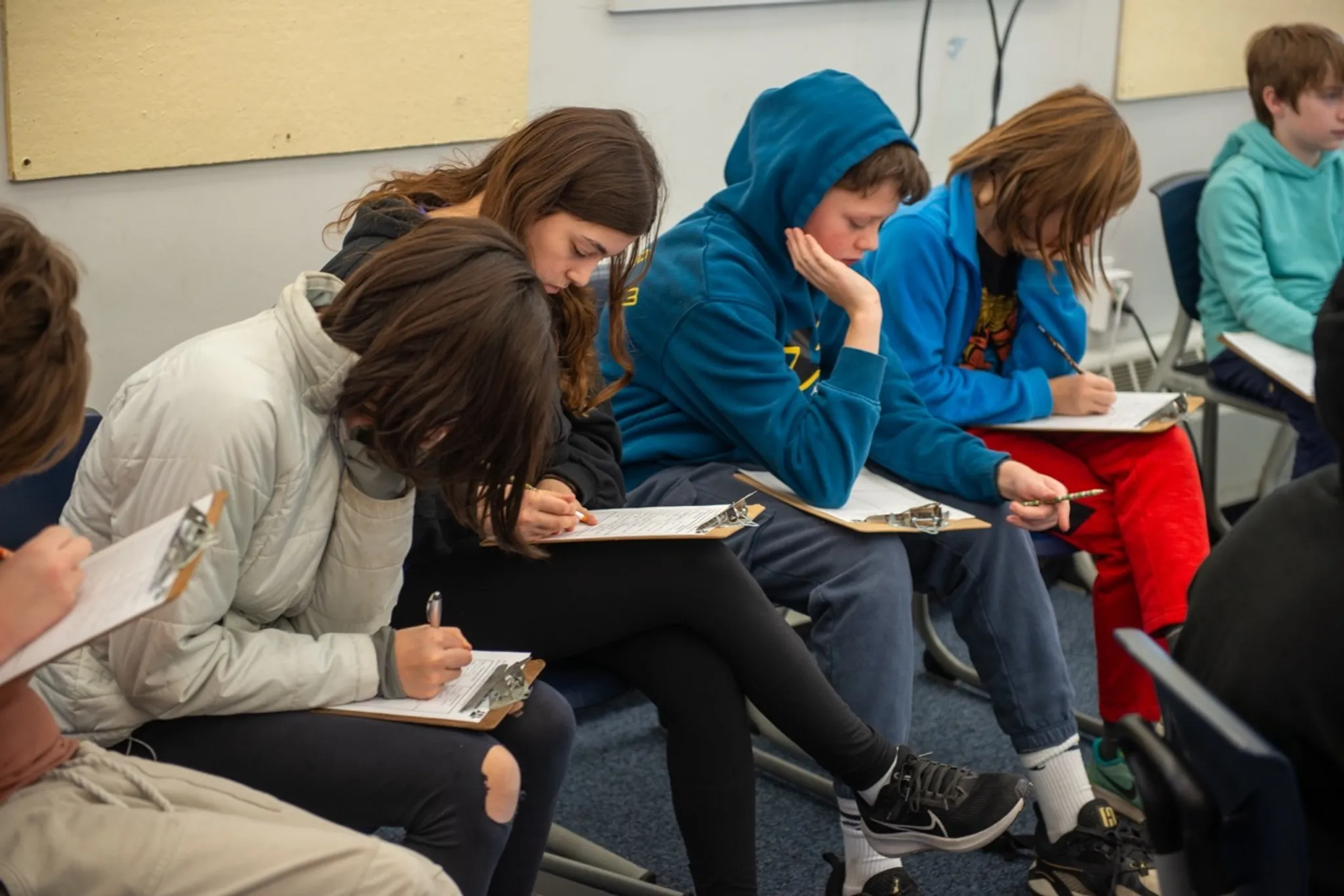
Writing at Fayerweather is a daily practice. It is one of the central ways children come to make meaning of their experience and their world. Children here write every day, across modes and forms.
Our writers build the craft in use. They write personal narratives, stories, letters, research, poems, opinion pieces, arguments, analyses, always in service of something real. The writing goes somewhere. It is read aloud, sent, performed, displayed, published for a real audience. This is the difference between writing as assignment and writing as life.
What it looks like.
The writing arc begins in pre-kindergarten, where children dictate stories to their teachers and illustrate the pages themselves, producing real books they can hold in their hands. In the early elementary grades, children begin to write in their own words, with invented spelling honored as they build toward convention. In the middle grades, writing expands across genres — persuasive letters to officials that are actually sent, biographies researched and written across weeks, journal exchanges with teachers that become sustained written conversations. In the upper grades, children write multi-paragraph literary analysis and original research, defending their arguments with evidence and revising across drafts.
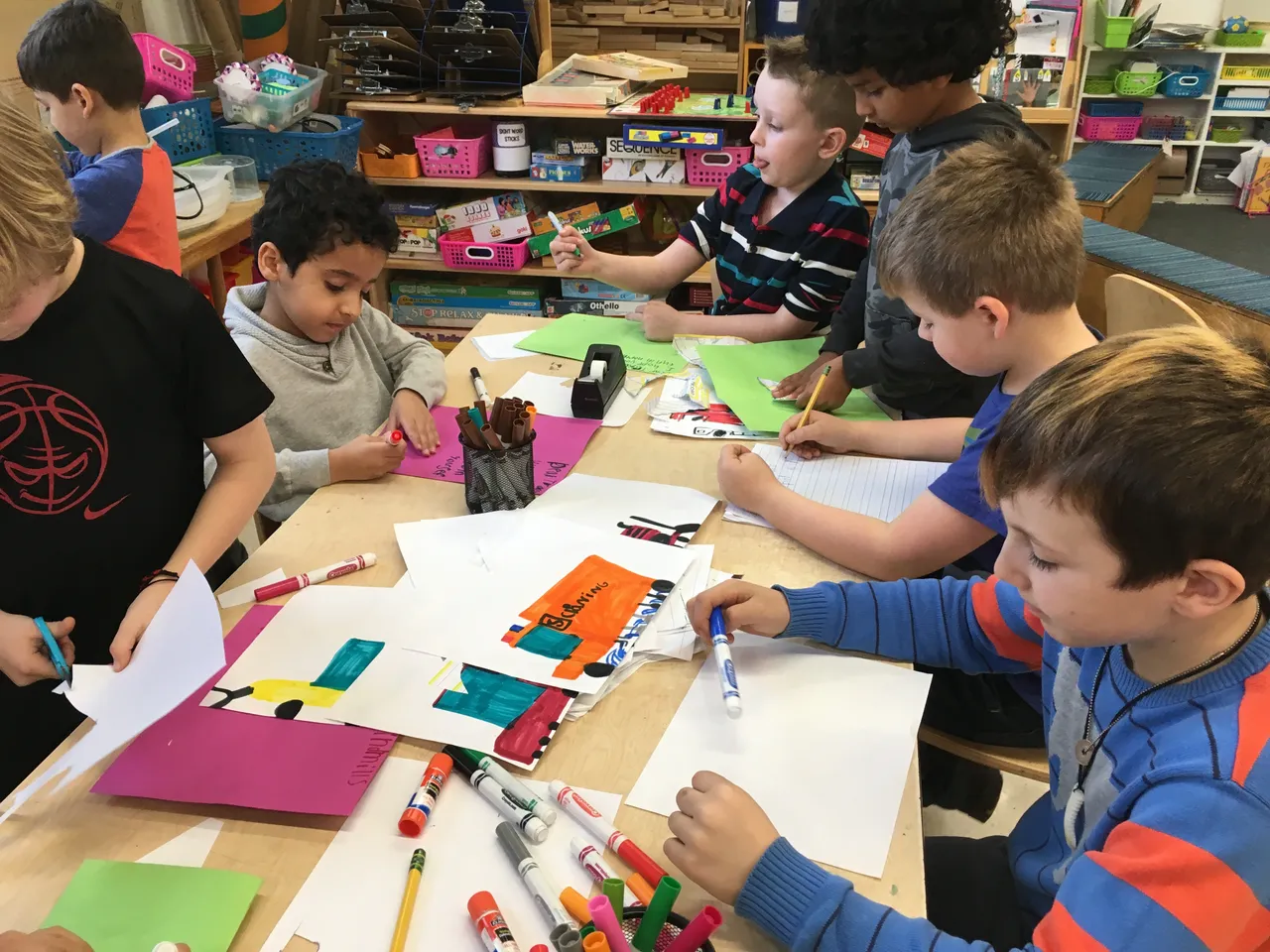
Writing time in our classrooms has the rhythm of a working studio. Children are drafting. Some are conferring one-on-one with a teacher. Some are reading a classmate's draft and offering feedback. The work is serious, and it belongs to the writer. Our teachers' job in this room is demanding: teaching conventions when children are ready for them, helping each writer find what they are trying to say, holding the work to a real standard without taking the work away from its author.
What the practice develops in children.
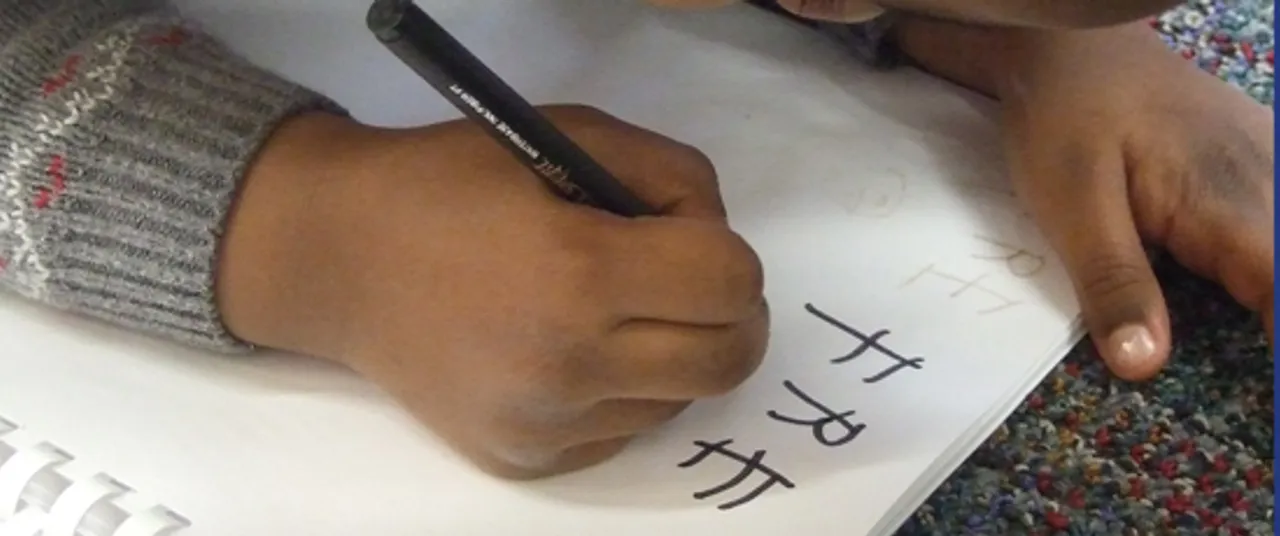
Children who have written daily for years, across forms, for real audiences, leave Fayerweather with true writing ability. They can construct an argument, develop a character, make a case, describe a scene, revise a sentence until it says what they meant. They know how to start a piece when they do not yet know what they want to say, and they know how to find what they want to say through the writing itself.
Writing has also become a way of thinking for them. When they face a complicated question, they can write their way into it. When they want to persuade, they know how to marshal their reasons in language. When they are trying to understand what they feel, they have a tool for that too. They leave with a voice they have developed over years of using it.
A pedagogy with a long history
Our approach grows from the writing workshop tradition, shaped by educators including Donald Graves, Lucy Calkins, and Nancie Atwell. The core argument of that tradition is that children learn to write the same way writers always have — by writing regularly, across forms, on topics they care about, with time to revise, with response from thoughtful readers, in the company of other writers. Writing, in this model, is a practice every child enters and develops at their own pace. bell hooks has written of writing as self-authorship, a way of becoming the author of one's own life rather than remaining the object of someone else's story. Children treated as writers, over years, in a school that takes their writing seriously, become people who can write themselves into being.
This practice in action.
Writing is woven through every grade at Fayerweather. The projects below are among the structures that anchor the writing arc.
Grade Pre-Kindergarten
Bookmaking
In PreK, students make books. Books with covers and pages and stories inside. Students dictate or write their texts, illustrate them, and bind them. Then the books go somewhere: home, the classroom library, the morning meeting circle. They go somewhere that signals that what the student made is real.
Bookmaking in PreK is foundational to the writing life because it gives children an experience of themselves as authors before they can fully spell. The story matters. The pictures matter. The act of making something that others will read — that matters most. Children who have made books understand, at a felt level, what writing is for and who it's for, getting an embodied experience of the way that books and writing can connect with others, make stories that last, and convey something meaningful about the author to the world they live in.
Founded in 1967, Fayerweather is an all-gender independent private school enrolling students in pre-kindergarten through eighth grade and located in Cambridge, MA. Children here are taken seriously — as thinkers, as individuals, as people whose presence in the world already matters. They learn by doing real things, in real places, for real audiences. They become themselves, in community, over time.