The Work of Making
Children here create, sing, paint, build, play, and perform.
Children arrive wanting to make things. Making is one of the primary ways children think, and one of the primary ways they show what they know. Children here work across the full range of making — visual art, music, shop, theater, design — with specialists in each field who bring the standards of their disciplines to the work. They build, draw, paint, sculpt, sing, stage, invent. And what children make does not stay solely in the classroom. It goes out into the world: hung in hallways, performed on stages, read aloud to the whole-school community, shared in public. come to understand that their work is worth making well, and that the world will receive it.
What it looks like.
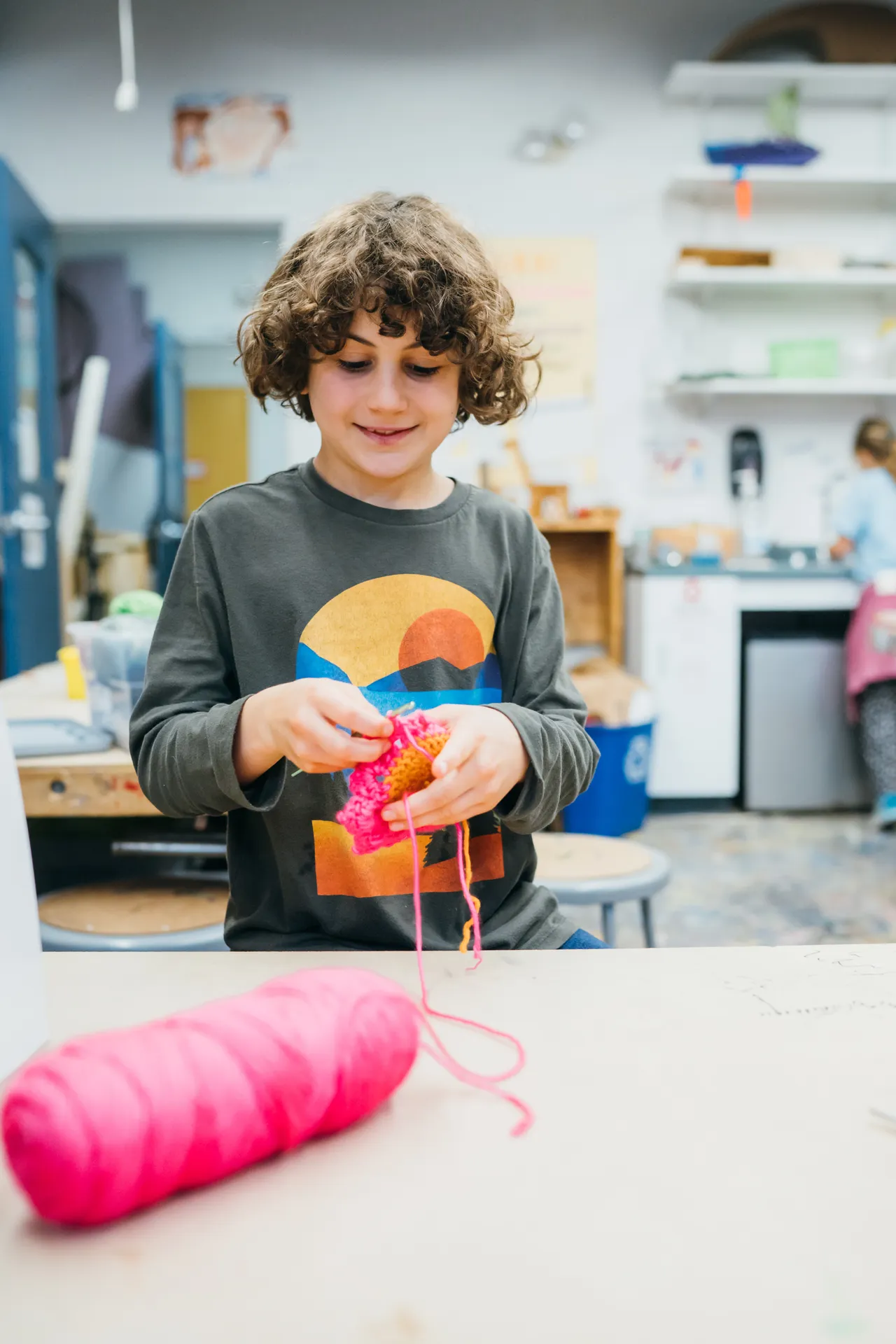
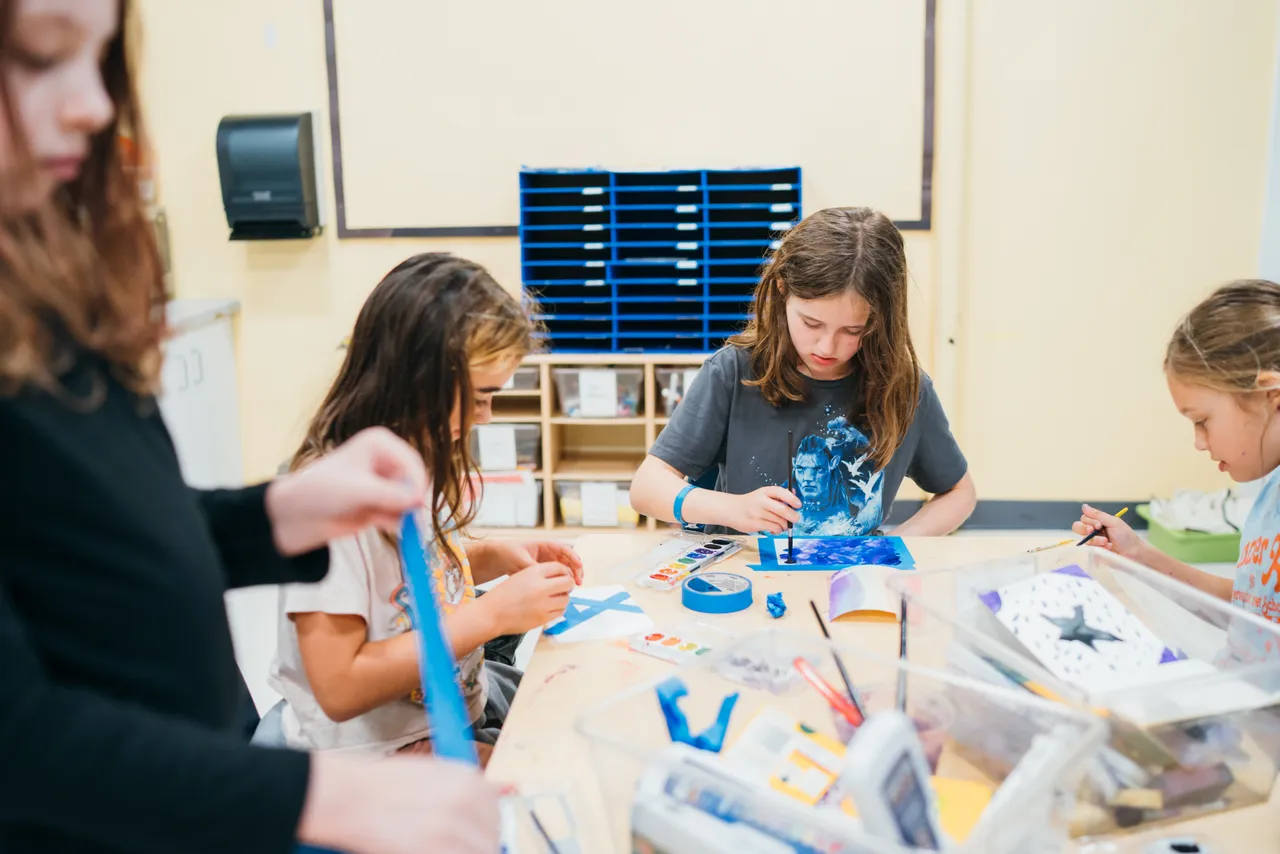
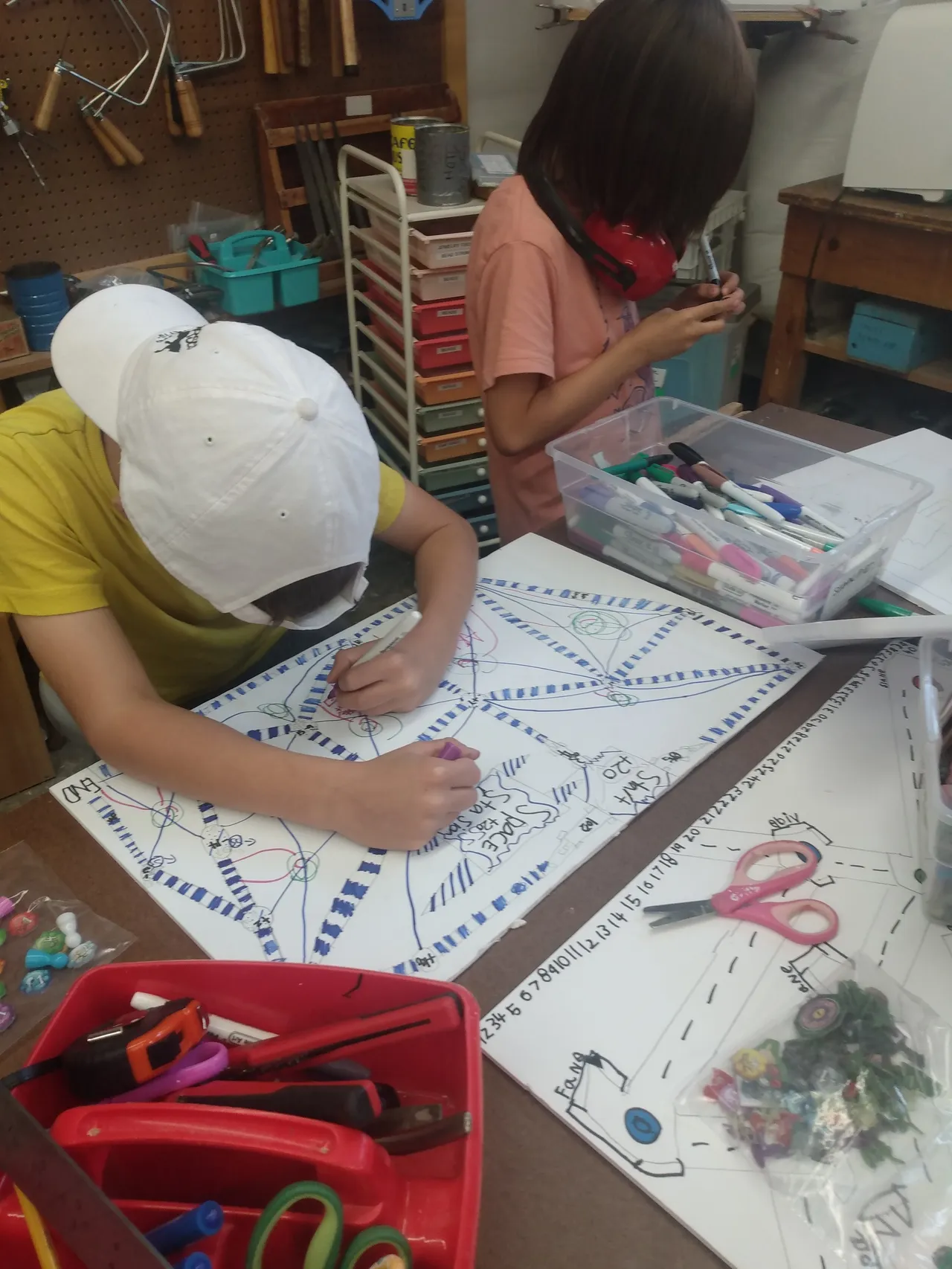
In the art room, children work across painting, drawing, sculpture, clay, printmaking, collage, mask-making, and three-dimensional design. In the youngest grades, the work is exploratory — color, texture, composition, balance — through watercolor, papier-mâché, oil pastels, and more. As children grow, the projects deepen: self-portraits, mandalas, Day of the Dead altar-making, extended study of artistic traditions from around the world. By seventh and eighth grade, students can elect a narrower discipline to pursue in depth — sculpture, oil painting, found-object assemblage, or an integrated shop-and-studio project.
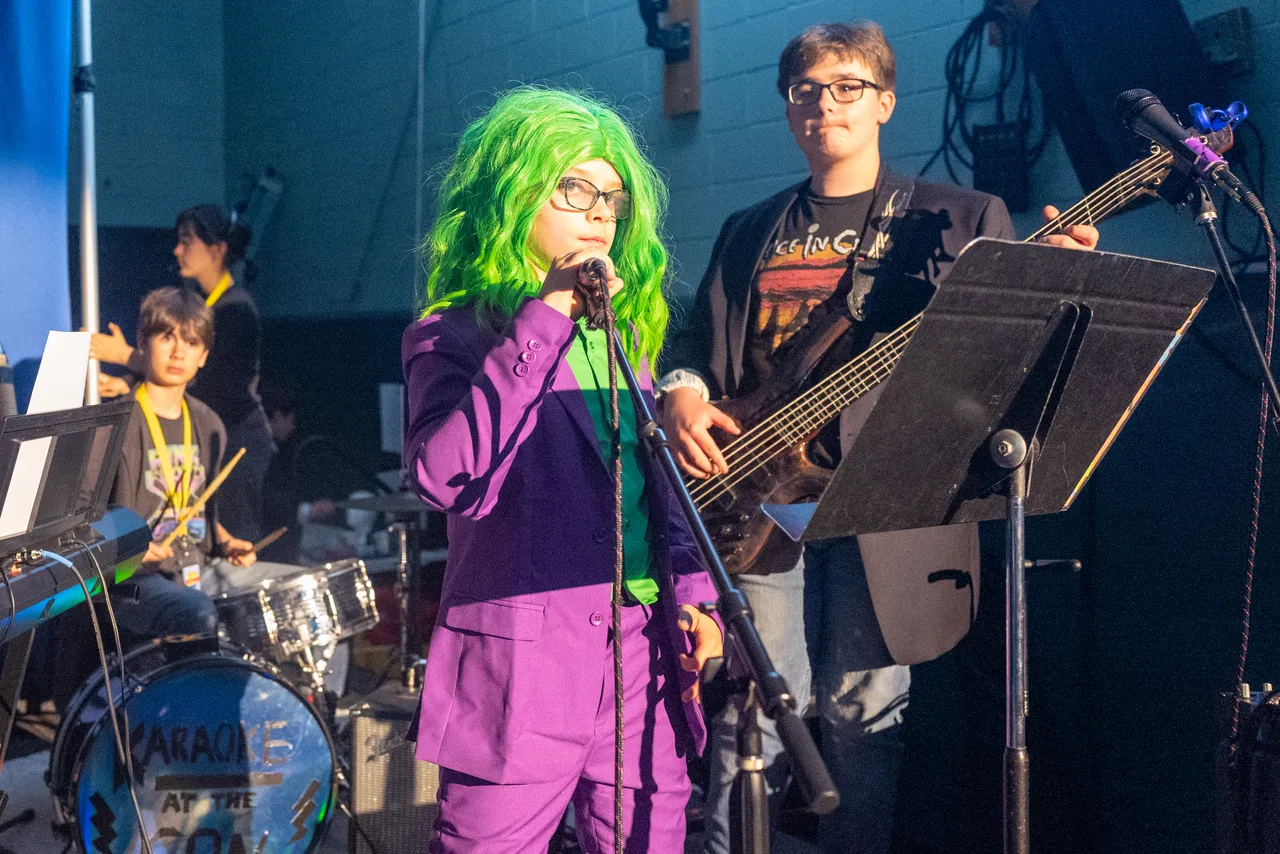
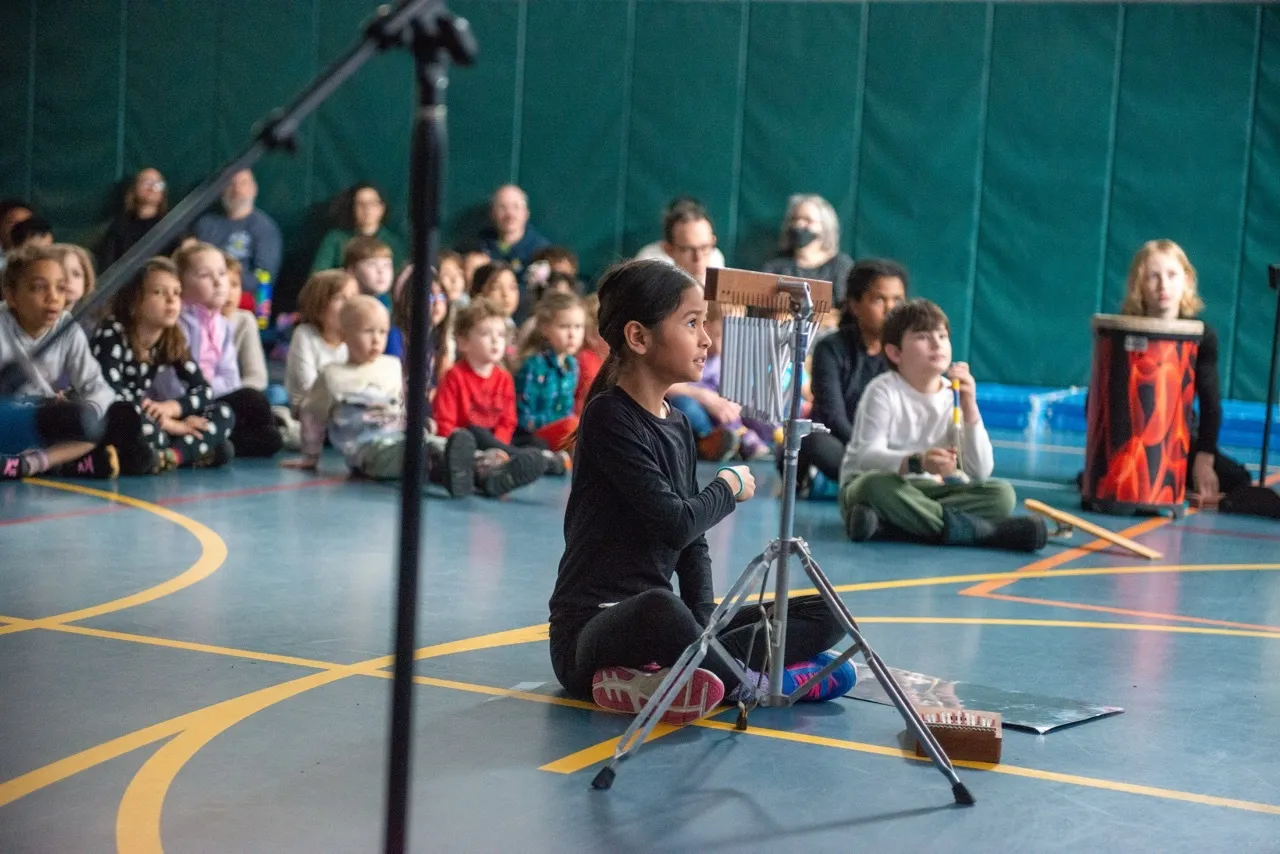
In the music room, the commitment is simple: we make music rather than talk about it. From Pre-K through second grade, children sing, move, learn to recognize pitch, invent their own rhythms, and try instruments from all four instrument families. In third and fourth grade, they take on units in guitar, keyboard, and world drumming, and compose original pieces in small groups. By fifth grade and up, students choose songs to learn together and rehearse toward school-wide performances, with the teacher writing parts that match each child's current ability on guitar, keyboard, bass, or drums. No prior training is required — every child is supported into the ensemble.
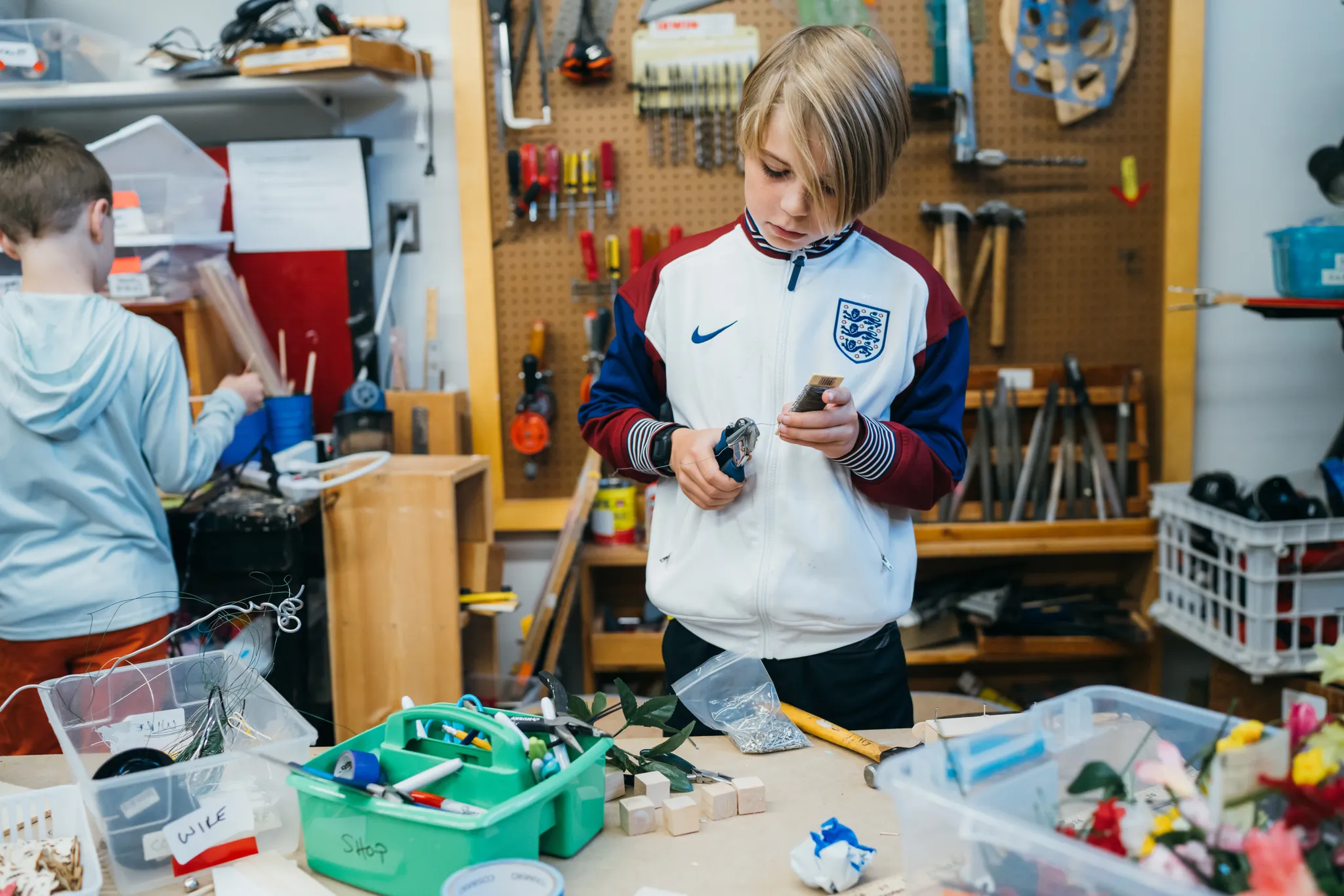
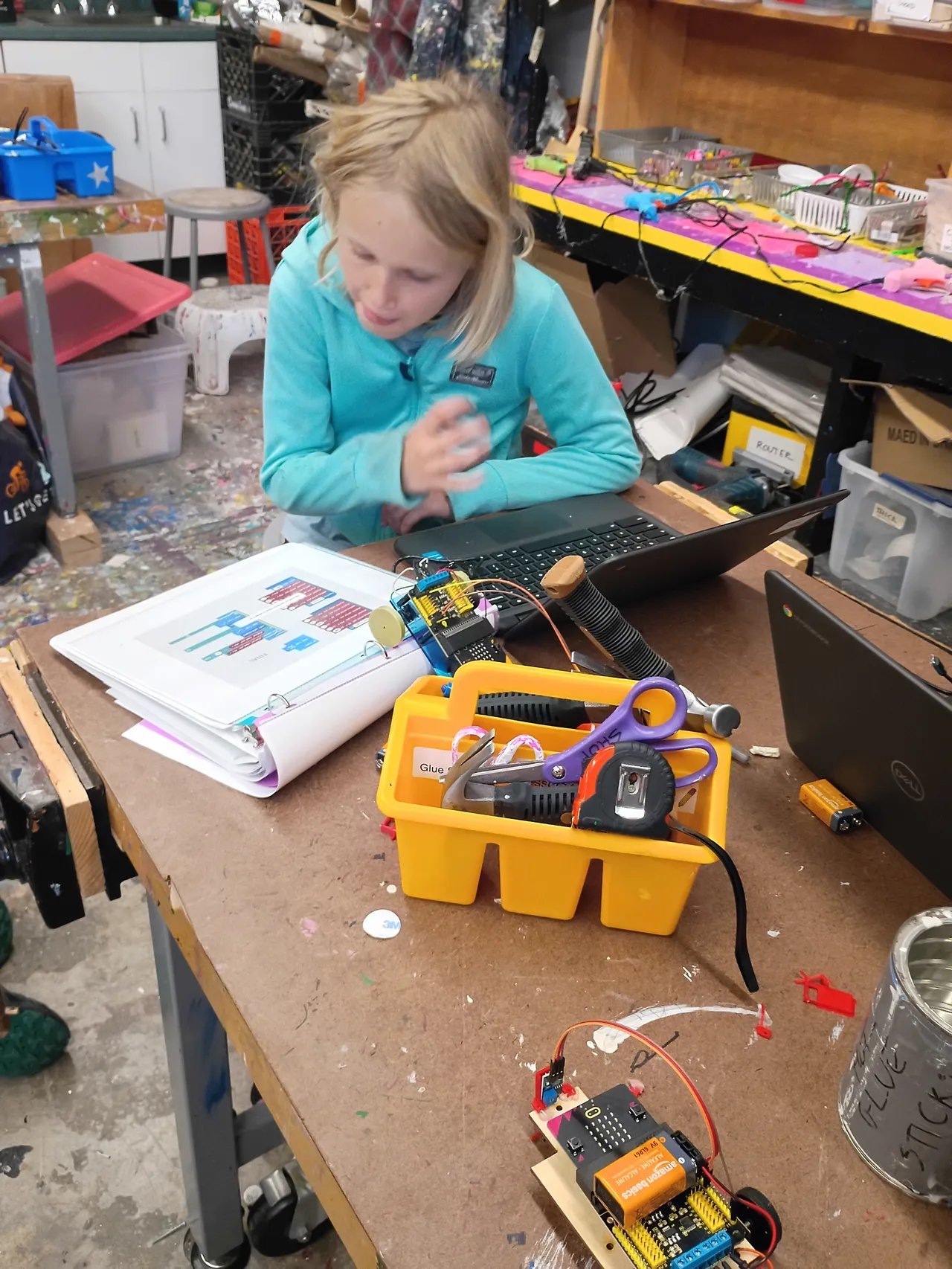
In the shop, children are designers and builders. Projects are chosen by the students themselves; the curriculum is deliberately open. Younger children learn the basic tools — sanding block, hand drill, hammer, coping saw, rasp. By the middle grades, additional hand tools and the drill press are introduced. In the upper grades, students work with bandsaws, scroll saws, and sabre saws as their projects demand. What the shop teaches, beyond craft, is thoughtful decision-making: planning, carrying a project through to completion, working cooperatively, and valuing the process of making alongside the product.
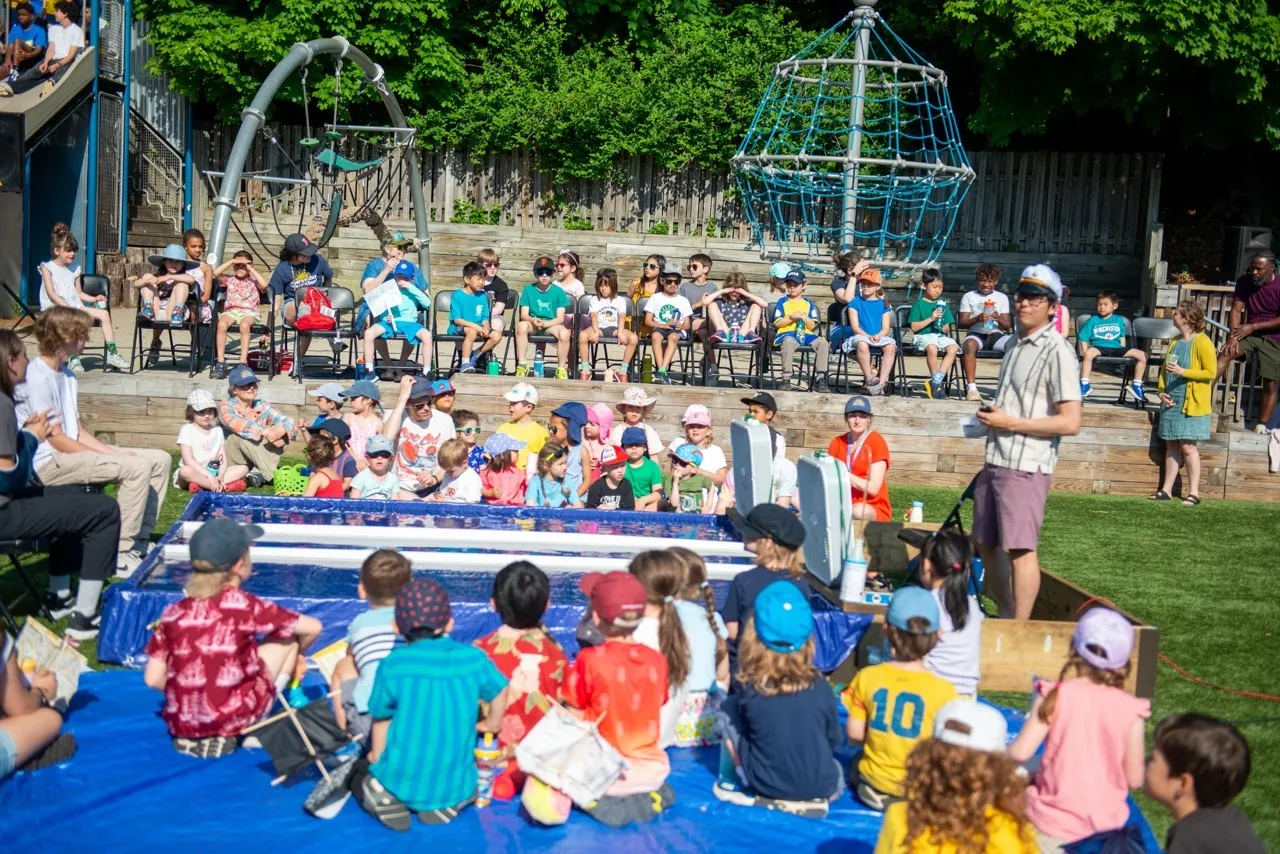
Theater runs through every grade. In Pre-K, children act out favorite books at circle time. In kindergarten through second grade, classes choose a story to stage as a play, writing the script, building the set, making the props. Third- and fourth-graders perform a storytelling piece built from their study of the Wampanoag people of New England, sharing family stories with the whole community. Fifth- and sixth-graders take on the Biographies Project — researching a noteworthy figure in depth, writing an autobiography in character, and presenting at All-School Meeting followed by a Living Wax Museum where the Fayerweather audience asks them questions. And for seventh- and eighth-graders, the year culminates in the Unit Play — a three-night performance, with students acting, designing and building the set, running lights and sound, and designing costumes.
What the practice develops in children.
Our students develop technical skill — painting, composing, performing, building, writing, speaking. They also develop the less visible capacities of craft: patience with a difficult piece of work, the willingness to revise, the judgment to know when something is finished.
They come to understand that being a maker is something any human being can do, given instruction, time, and real audiences. And they develop a kind of confidence that is hard to produce any other way. Our students are known — by the secondary schools that receive them and by the community that watches them perform — for their public speaking and performance abilities. This is what happens to children who have been asked to make real things and share them with real people, for years.
A pedagogy with a long history
Our commitment to making grows from a tradition that treats children as producers of culture. John Dewey argued that learning must be active, that children make meaning through their own work. The maker-education movement, emerging from the work of Seymour Papert at MIT and continued at institutions like the Media Lab, has built a rigorous case for learning through building. The arts-education tradition shaped by thinkers like Maxine Greene has argued that engagement with making is serious intellectual work, part of the curriculum rather than decoration on it. In music, our program draws on Orff Schulwerk, Eurhythmics, and Solfège — approaches that treat music as something children actively make and move to, rather than passively receive.
This practice in action.
Arts and building/making happen throughout the year, in every grade, across many media. The projects below are among the most visible in the life of the school.
Grades 7/8
The Unit Play
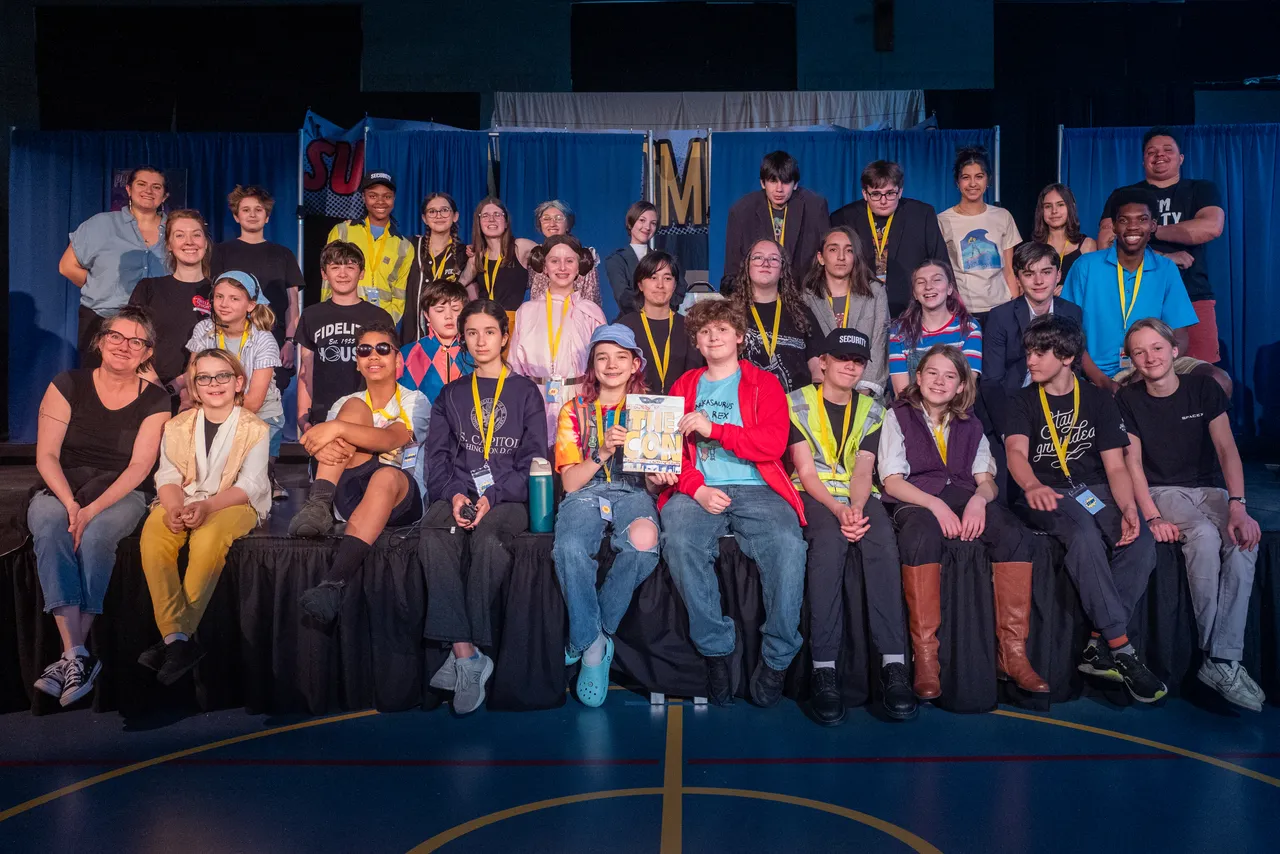
The Unit Play has been a tradition since 1994. Every aspect of the production belongs to the 7th and 8th graders: acting, set design and construction, costuming, lighting, sound, and stage management. Students have to genuinely understand the technical systems beyond just following instructions for the show to work.
Each year the production competes at the Massachusetts Educational Theatre Guild's statewide Middle School Drama Festival, where more than 50 schools present work to professional adjudicators awarding both acting and technical excellence. The format demands a particular kind of discipline: the entire production, set and all, must be assembled and struck in a single day. Fayerweather has won several awards at METG. Total ownership, it turns out, produces serious craft.
Founded in 1967, Fayerweather is an all-gender independent private school enrolling students in pre-kindergarten through eighth grade and located in Cambridge, MA. Children here are taken seriously — as thinkers, as individuals, as people whose presence in the world already matters. They learn by doing real things, in real places, for real audiences. They become themselves, in community, over time.