Identity, Justice, & Belonging
We have been dedicated to identity, belonging, and justice since our founding in 1967. Race, family, culture, history, the questions children bring about a complex and unequal world — these are not separated from academic learning here, but instead are woven through it.
A child cannot be fully known if their family, their history, the way they move through the world are treated as background. A school cannot teach honestly if it pretends those questions live outside the classroom. We have built ours to teach with them at the center.
When we say children here are taken seriously, we mean every aspect of who they are.
What this looks like in our classrooms.
Identity is not a unit we cover. It runs through the curriculum — through what books we put in children's hands, what histories we teach, what voices children encounter, what questions teachers ask, and what hard subjects we are willing to teach honestly.
In the primary grades, children begin to notice and name the patterns of bias they see in the world. First and second graders compare gender stereotypes by looking carefully at toy advertisements. Third and fourth graders, during their study of the Wampanoag people of New England, have petitioned sports teams that use mascots and symbols perpetuating stereotypes of Indigenous peoples and, in 2015, successfully petitioned Fayerweather itself to change the name of Columbus Day to Indigenous Peoples Day. Children at this age learn what it means to stand up for someone else, and how to use their own voice on behalf of someone else's dignity.
In the middle grades, the conversations deepen. Students study American history with attention to whose stories have been told and whose have been silenced. The Justice and Dissent unit in the upper grades brings students into sustained study of the Holocaust and the American Civil Rights Movement — examining injustice directly, and the people and movements who have worked to confront it. In the seventh and eighth grade, students research and embody an individual who stood up for justice, presenting their lives in a sustained piece of work for parents and the wider community. In the Petitioner's Project, each sixth grader identifies a real civic question, often a question of justice, and develops, researches, and advocates a position on it publicly. Students also travel to Puerto Rico to engage the island's history, culture, and ongoing questions about self-determination on the island's own terms.
This work has its own developmental arc, paced across the years a child is with us. It is justice education, in the plainest sense and we have taught this way for decades, because we believe it is what an honest education requires.
What this looks like in our community.
A school can teach about justice and still fail to live it. We work to both teach and live what justice means.
Some of the structures that make this work real at Fayerweather:
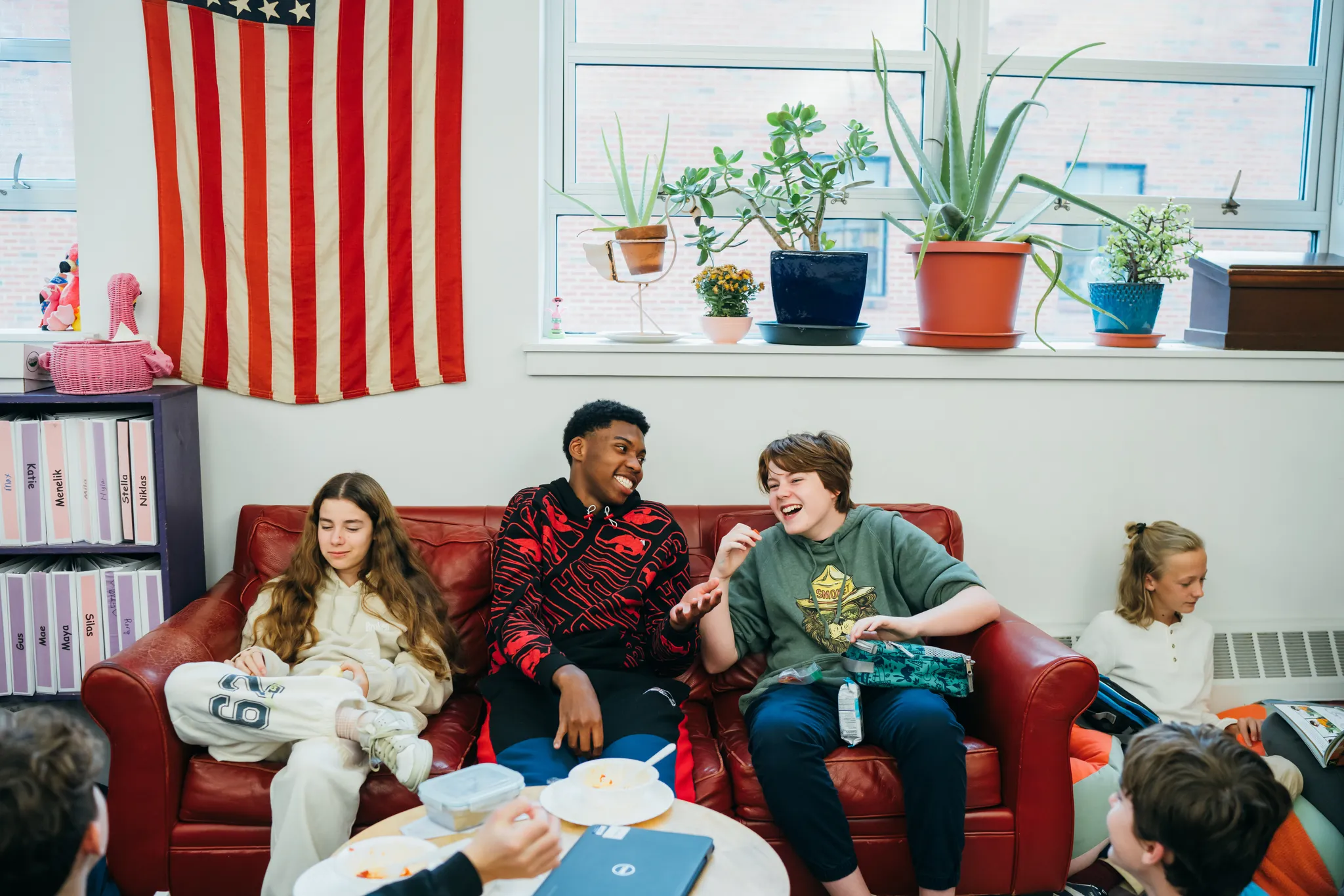
The Kids of Color Lunch, which has met weekly since 1992. The group began at the request of Black, Indigenous, and students of color in the fifth and sixth grades, and today brings together students all grades, hosted by faculty and staff of color, for connection, shared culture, and conversation about the experiences and questions students bring with them.
The Rainbow Lunch, open to any student in grades K-4 who identifies as LGBTQ+ or is part of an LGBTQ+ family. We gather together for lunch, camaraderie, and connection through casual conversation and games.
The Gender & Sexuality Alliance (GSA), a space for students in grades 5-8 to build community around identity and belonging. The GSA is open to all students who are interested in fostering a culture of kindness and inclusion. Members of the GSA typically participate in Fayerweather's Pride ASM and Boston's Pride event.
The Equity Collaborative Committee (ECC), made up of teaching staff and administration, holds the school's ongoing DEIJB work. The ECC supports race-based affinity spaces for staff, evaluates how identity and justice work shows up in our curriculum, and responds when incidents of bias arise in our community.
The Boston Educators of Color (BEOC) gatherings, hosted at Fayerweather since 2008 and planned by our faculty and staff of color, bring educators of color from the greater Boston area together for connection, support, and conversation across schools.
The Children's March and Love Rally, a student-led annual event led by our oldest students, has been a Fayerweather tradition for years. Students choose a theme, organize a march from Harvard Square to Cambridge City Hall, and invite young people from across the region to participate through art, poetry, and speeches.
A school with a long history.
We have been doing this work since the school's founding, in the progressive tradition that takes seriously the connection between how children are taught and what kind of world is being built. That tradition runs from John Dewey through the Civil Rights movement through the educators of liberatory pedagogy — bell hooks, Paulo Freire, Gloria Ladson-Billings — whose work continues to shape our own.
Today's language for this work is more recent than the work itself. DEIJB. Anti-racism. Equity. Belonging. We use these terms because they are the language families and educators recognize. We do not lead with them in our outward-facing communication because the work is bigger than its labels and because the work is best understood through what children actually do here, day by day, year by year.
What we are still working on.
No school is finished with this work. We continue to examine our curriculum for gaps and silences. We continue to listen carefully when families and faculty tell us we have not gotten it right. We continue to build a faculty and community that reflects the world children are inheriting.
We name this as our framework and orientation to the work of justice and education. A school that claimed to have arrived at justice would not be telling the truth. A school that takes the work seriously is one that knows it never ends.
Keep exploring.
Founded in 1967, Fayerweather is an all-gender independent private school enrolling students in pre-kindergarten through eighth grade and located in Cambridge, MA. Children here are taken seriously — as thinkers, as individuals, as people whose presence in the world already matters. They learn by doing real things, in real places, for real audiences. They become themselves, in community, over time.